Analysis of the Principles and Procedures Followed by two NGOs namely Consumers’ Forum, Basrur (CFB) and Human Rights Protection Foundation (HRPF), Udupi
Preface
DuringFeb2019, the Karnataka State Law University announced a cluster of minor research projects wherein proposals were invited from faculty members of various law colleges of Karnataka to spot, study and evaluate the Non-State Justice Systems (NSJS), if any, prevalent in various parts of Karnataka. We could spot two organizations namely Consumers‟ Forum,Basrur(CFB)and Human Rights Protection Foundation (HRPF), Udupi. Both these organizations have been guiding the citizens, not only to fight for their rights, but also encouraging the litigants to go for out of Court settlements through a novel ADR technique.
The NGOs with difference:
Consumers‟ Forum, Basrur and Human Rights Protection Foundation, Udupi (herein after both these NGOs are referred to as „The Forum‟) are two NGOs, which over a period of four decades, have shown how efficiency can be increased in Government offices in providing services to the citizens. While the Consumers‟ Forum, Basrur came into existence on 5th May 1980, the Human Rights Protection Foundation was establishedafter 12 years on 12th August 1992. Both these organizations are operating from their office situated in Kunjibettu,Udupi. The cases related to deficiency in services as well as unfair trade practices are dealt with by Consumers‟ Forum, Basrur. All other cases received by the Forum are handled by Human Rights Protection Foundation, Udupi.
The methods used by the Forum are democratic, a political, and nonviolent with appropriate self- help strategies. After initial correspondence with Service providers/Government officials, if injustice is proved, the aggrieved will be guided to defend his case. The activists passionately believe that educating the common man and empowering him to solve his own problem is the most effective method for long-term results. Both these organizations guide and support the victims in their fight through media publicity and legal battles. The activists step in only when victims are either illiterate or helpless and have exhausted all their efforts to get justice.
The Forum has never resorted to traditional pressure tactics such as Dharna, Fasting, Rallies, Morchas and such other coercive strategies which expose the common man to life threatening situations and involve expenses etc. A modus operandi was developed over the years towards systematic correspondence in the ascending order of bureaucratic/ political hierarchy. Every officer in the department concerned, right up to the Chief Minister has been given enough
opportunity to set right their mistakes or to solve the citizens‟ problem. Despite all the efforts, if the complainants failed to get justice, newspaper columns were used to create public opinion. Further, strategies were also developed to communicate the public opinion thus created to the authorities concerned. Complainants were advised to approach the court only as a last resort.
Neither of these organizations have ever collected any fees from citizens for the guidance and support provided. They never took donations from public nor have they received any government grants. The day-to-day expenses were met from the honorarium received from periodicals for the articles contributed and sale proceeds of the literature published by the Forum. Whenever funds are required for any project or program, the members of the Trust chip in with equal contributions to raise the amount. Thus, the Forum has achieved financial independence with no strings attached.
Trustees are selected carefully from the society. They take an oath that they would neither join any political outfit nor receive awards/ recognition from any sources for the service rendered. This was to ensure that nobody enters the Forum with a private agenda. For the last 40 years cases more than38, 000 have been registered by these two NGOs, with a 78% success rate. The remaining cases were related to false complaints or misconceptions by the complainant himself. All the case records have been well preserved and are now archived in the library of the Vaikunta Baliga College of Law at Udupi.1
Source and Collection of Data:
After working for more than 10 months, a comprehensive report has been prepared. The study will be mainly focused on the functioning and methodologies of Human Right Protection Foundation and Consumers‟ Forum, Basrur. The principal source of data for the present study is based on both primary as well as secondary data. The work highlights the continuous and invaluable service rendered by these two NGOs in these four decades to poor, downt trodden and vulnerable classes of society.
The data have been collected by personal interviews and interactions with the stakeholders through questionnaires and study of cases successfully tackled by these NGOs.
Prof. Nirmala Kumari
Date :01.09.2020
1 Public Interest Movement: Hand book for Activists. Published by Consumers‟ Forum, Basrur® 2002
Prologue
In 1980, addressing Indian Parliament, the then Law Minister, P. Shiv Shankar revealed that37,851 litigations were pending in the Supreme Court of India while crores of litigations were pending in various other courts in the country.2 People of India had to wait for years together to get justice delivery through Anglo Saxon system 3 of Judiciary existing in India. Every now and then Government of India appointed Committees for judicial reforms. Common citizens never knew whether these Committees submitted any reports and if submitted, whether the recommendations 4of these committees were implemented.
Other than cursing the judiciary or the government, a common citizen did not know the way out. He had no say in the matter. Whenever his rights were violated, the only way was to file one more petition in the court of law, even though he knew there was no point in burdening already overburdened judiciary. Delay in justice delivery and the expenses involved in litigation were the cause of worry. Therefore, the common citizen was forced to accept the injustice. Therefore, a novel method of Justice Delivery which could be an alternative or supportive to the existing system was very much necessary.
2 National Judicial Data Grid(Districts & Taluka Courts of India) and main.sci.gov.in>statistics. The expansion of the power of the Supreme Court of India in Fundamental Rights & Governance Decisions. Ph.d Thesis submitted to University of California by Manoj S.Mate,2010
3 The innovation of jurisprudence in the British era by Diganth Raj Sehgal
4 doj.gov.in & 12.11 MB.Department of justice
Present position in the Country
Indian Judiciary is over-burdened with pending cases. The Indian Judiciary is crumbling under the weight of pending cases due to many reasons. Government is the biggest litigant in the country. State fights cases against the citizens at the cost of the citizens. Moreover the officers neither allow the cases to get resolved nor withdraw the same as they have vested interest in pendency.5
According to the recent estimates of the National Judicial Data Grid (NJDG), a total of cases 32130524 are pending before various courts in India, of which 8982546cases are civil in nature and 23147978 are criminal cases6
India‟s Supreme Court works 190 days in all every year, while the number is 232 for High Courts and 244 for lower courts7. Hence, there is an urgent need to reform Indian Legal System.
Law Commission of India, in order to reduce this burden, has recommended several procedural changes in the Legal System; Procedural Reforms were introduced in Civil Procedure Code such as Sec. 89 of CPC was amended to introduce Settlement of Disputes outside the Court (vide the Code of Civil Procedure (Amendment) Act 1999 and Criminal Procedure Code introduced Plea Bargaining vide Criminal Law (Amendment) Act, 2005.
India now has the whole-hearted legislative approval for beneficial law reforms contained in the Code of Civil Procedure, 1908.
The Arbitration and Conciliation Act, 1996 and the Legal Services Authorities Act, 1987. It is, therefore, necessary to provide guidelines and promote the reforms extensively by utilizing the provisions made in the last-mentioned Act.
5 prsindia.org and indiankanoon.org>doc
6 National Judicial Data Grid Google
7 main.sci.gov.in and districts.ecourts.gov.in
Recommendations of Law Commission of India
The provisions made in the Arbitration and Conciliation Act, 1996 regarding the process of conciliation are required to be made applicable to mediation also because there is no real difference between the two. The High Courts can frame rules under Section 89 (2) (d) read with Section
122 of the Code of Civil Procedure to make mediation procedures effective immediately.
§ In order to establish ADR as a viable alternative, it is crucial to provide education about benefits of the process to the community, the members of the Bar and the Courts. It will be necessary to familiarize the potential consumers of mediation services with the nature of the process, the ways mediation can benefit them and ways it differs from arbitration and trial. Equally important is to promote and encourage the managerial qualities of a judge. Coordinated efforts will have to be promptly started to effectively use the ADR provisions incorporated in the Code of Civil Procedure, 1908.
§ Brochures explaining the availability of mediation and other ADR methods must be published and handed over to the plaintiffs at the time of filing of the suits and to the defendants along with the summons of the suit. Directions to the Principal Judges of all courts in any acceptable modes are required to be issued to all the courts in their jurisdictions to assign the cases to specific courts and keep the track thereof from the beginning and enforce the case management techniques.
§ To achieve the success in reforms‟ implementation, pilot projects in some selected cities can be introduced so as to utilize the experience later in other courts. A few courts can be selected to follow mediation and case management procedures on experimental basis and judges who are allotted such work can be specially selected on the basis of their aptitude and they can be specially trained for the assignments.
§ Cases for the reference to mediation can be categorized initially to include cases having minimum discovery requirements and maximum settlement
elements, such as cases relating to money recovery, loan default, family disputes, etc.
§ A panel of mediators should be immediately formed and for the purpose, programmes for imparting basic training and orientation to the intending mediators should be organized. Community leaders, experienced and respected businessmen, retired judges, experts in different fields, retired bureaucrats and lawyers can be persuaded to serve as mediators. Bar Councils, Bar Associations and Judicial Academies can join hands to organize workshops and conferences on the subjects.
§ Retired judges, desiring to act as mediators can be persuaded to consciously address a general concern over the difference between the mindset of a Judge and of a Mediator. Appointment of retired Judges as mediators can inspire great confidence in the mediation process amongst the participants with a familiarization programme with mediation process to avoid any role confusion.
§ International organizations like Asian Development Bank and World Bank, which have large funds for the developmental purposes, should be approached to provide and promote international training facilities, to set up pilot projects and specialized infrastructural facilities for exchange of knowledge and experience and also organize regional conferences and training the trainers‟ programmes. Formation of joint Bench-Bar Committees to implement the reformative provisions of law may prove very useful.
§ The courts, in which the pilot projects are to work, are to be provided with computers and case tracking facilities and there shall be effective supervision of the pilot projects. Apart from that, in courts, there shall be intensive training imparted about the basic ideas to the persons who are going to be in-charge, so that the case management principles and the schedules and the ADR processes are well-administered.
§ State, Municipal Corporations and Government Corporations, who are the largest litigants, should be drawn into the process of Mediation by framing appropriate schemes.
§ Till Court annexed mediation programmes and proper infrastructural facilities are established it would be appropriate at least to provide mediation facilities through private reliable mediation centers run by the Bar Associations and/or non-Governmental organizations and appropriate funds or grants can be provided to them. It is advisable to provide such mediation facilities at the doorsteps of the courthouses.
Research Envisaged
Most of the recommendations of the Law Commission of India to reduce the delay in justice delivery require interference of the State Sponsored Judiciary for their implementation. Very few of them suggest adopting Non-State Judicial Systems to reduce the burden of State-owned Judiciary. There are Non-State bodies working in India in this direction, one of them being civil societies such as NGOs.
Human Rights Protection Foundation, Udupi and Consumers‟ Forum, Basrur (herein after both these NGOs together are referred to as „the Forum‟) have been functioning for the last four decades. They have handled a considerable number of cases without taking the issues to the judiciary.
Therefore, it was decided to evaluate the modus operandi of these Organizations by going through the literature available on internet, website maintained by the Forum, digitalized documents available in the archive and the live files available.
This research project investigates the efforts made by the activists in establishing the organizations and evaluates effectiveness of their modus operandi.
The questions asked and the observations of investigators are presented under following headings:
Q 1. Circumstances in which the organizations and the movement came into existence.
Chapter 1. Origin and Growth of Public Interest Movement (Page No.11)
Q 2. Whether these organizations shave been successful in inventing a novel ADR technique?
Chapter 2. Efforts made by the Activists to develop a novel ADR Technique: (Page No.12)
Q 3. How and why the psychological barriers exhibited in Indian society were identified?
Chapter 3. Identification of Psychological barriers (Page No.14).
Q 4. Whether there was a necessity to define the word ‘Consumer’ and related expressions? Chapter 4. The definition of terms, Consumer and Service provider, given by the Organization (Page No. 15-16)
Q 5. How were the psychological barriers identified, and the principles evolved, and methodology designed?
Chapter 5. Principles evolved and methodology designed(page No.17-30)
Q 6. Whether the procedures followed by these Organizations are comparable to that of Indian
Judicial System.
A 6. Comparison between the procedure followed in handling cases by the NGO (Basrur Consumer Forum) and that of summary trial held in the State owned Judiciary (Consumer Court)(Page No.31-35).
7) Are principles and procedures followed by both Basrur Consumer Forum & Human Rights Protection Foundation, Udupi in justice delivery, are constitutionally accepted and legally valid?
A. 7 To narrate the opinions of the Advocates and Activists (Page No.36-37)
8. Are there are any risk factors to the activists in running the movement?
A8. Comparison of functioning(risk factors and responsibilities) of NGO (Basrur Consumer Forum) with that of State-owned Judiciary (Consumer Court) (Page No.38).
9) Were any efforts made by the NGOs to spread the movement and train more Activists?
A 9 Efforts made by the NGOs to train more and more Activists and to form a network throughout the country.(Page No.39-40)
10. Were the organizations successful in expanding their activities during the last 40 years? Were these organizations effective in increasing their success rates?
A 10. Growth of popularity as well as success rates during the last 40 years(Page No.41-51).
Milestones in the Public Interest Movement (Page No.50)
Important events and achievements during the last 40 years of journey.
Q11. What are the factors which can be attributed to the increase in credibility of the movement?
A 11(i) . Code of conduct followed by activists in letter and spirit(Page No.51-52).
(ii). Strict adherence to the principles established by organization and activists (Page No.53)
Q1 Have these organizations successfully educated the citizens to know their rights and responsibilities?Have they been successful in creating public opinion against injustice?
A 12. Use of Media in educating the citizens and creating public opinion against injustice.(Page No. 55)
Q 13. Can these two organizations reduce the burden of State-sponsored judicial system and pendency of cases in Indian Courts.
A 13.No. of cases handled by the NGOs and the cases referred to State-owned Judiciary (Page No.60)
Q 14) Can these two organizations as Non-state Judicial System play any role in reducing time and expenses for litigant.
Q 15) Have these organisationssuccessfully supported the struggle of a citizen to get justice?
16. Guidance and support given to citizens.(Page No. 64)
Q 15) Have these Organizations utilized democratic principles and public participation processes to bring changes in grass root level by interacting with existing social and bureaucratic structure? Page No.66-67
Bibliography Page No.68
********
1. Origin and Growth of Public Interest Movement
Emergency was one of the most controversial events in the history of independent India. It was in effect from the 25th of June 1975 to the 21st of March 1977, imposed by the then Prime Minister of India, Indira Gandhi. During those 21 months, there were reports of gross violation of human rights across the country. There was widespread resentment across the educated middle class. For the first time since the independence India witnessed the human rights and civil rights violations on an alarming scale affecting all sections of the society.(1)
Even after four decades of attaining independence, the common citizen of India never had a taste of democracy. The problems with the Indian society were both complex and numerous. Corruption, bureaucratic arrogance, and citizens‟ ignorance regarding Government‟s administrative machinery fueled by illiteracy resulted in mass violations of civil rights. Feudalism, untouchability, casteism, communalism and total lack of understanding of democratic rights of a citizen led to human rights‟ violations.
During 18 months of Emergency, the Nation witnessed large scale violation of human rights 8
Thousands of citizens were imprisoned just for opposing the imposition of Emergency. The Government of India passed two ordinances namely, Defence of India Rule (DRI) and Maintenance of Internal Security Act (MISA)
(9 10 )to control aggrieved citizens.
All the fundamental rights including freedom of expression, right to peaceful protest were abolished throughout India. Even newspapers had to take permission from Government officials to publish news as well as editorials.
Post emergency, a group of youngsters from Udupi District gathered and decided to address the problems of violations of both civil and human rights. It was also necessary to create awareness among citizens to prevent repetition of emergency-like situations in India. None of participants knew that this meeting would be the beginning of a strong movement to protect human rights‟ violation.
To start with, it was necessary to develop appropriate strategy for the movement after studying the behavior, attitude, ambitions of average citizens. After a great deal of discussions, the group decided to begin with finding solutions to simple issues bothering common man in day-to-day life and then gradually move to tackle more complex problems. The objective was to invent a permanent solution for the evils that affect the citizens and deliver justice to them without any delay and at affordable cost. The questions were: How to go about it? From where to start? How to start? The immensity of the task was mindboggling.
2. Efforts by the Activists to develop a novel ADR Technique
An alternative method would be acceptable to the people only when it is inexpensive and less time consuming. Meanwhile, care had to be taken that such a new method should adhere to all the legal principles of natural justice as well as procedures followed in the existing state-owned judiciary in India.
A clear understanding of human behavior in dealing with social transactions, culturally inherited social values and psychological barriers preventing citizens from fighting for their rights were necessary to develop appropriate methodology. It was a challenge to design a system which could replace existing judicial procedures. Getting people to accept this novel idea was in itself a great task to achieve. Apart from this, a highly principled NGO and meaningful Public Movement was necessary to implement the new method of justice delivery.
Efforts in search of a model
Initially, the members of the group wanted to establish an organization to protect human rights. Dr Shanbhogue, one of the founder members, travelled throughout India in search of model organization shaving public interest protection as their main objective. Most of these were Trade Unions having protection of their members as their main objective. Others were environmentalists and philanthropists working for the uplift of tribal and other backward classes. There were very few activists and organizations specifically designed to protect Public Interest.
Surprisingly, most of the activists did not have any legal background. Some of them were emotional in their approach and claimed to be Gandhians. Organizing protest march with placards and shouting slogans, staging Dharna in front of District Collector‟s office etc., were their modus operandi. Even though they were highly dedicated towards their cause, they could not successfully get mass support. These approaches did not meet with enough success. Only a few affected people chose to protest. In such efforts, a very few affected people were found protesting for their rights, and in most cases without any significant success.
Successful Public Interest Movements in early 80s:
A sincere effort was initiated simultaneously in a small town of Udupi 16 and in a tiny village Basrur 17 in Kundapur Taluk. The initial objective was to empower citizens to fight for their
16 Udupi is a city in the Indian state of Karnataka. Udupi is situated about 55 km north of the educational, commercial and industrial hub Mangalore and about 422 km west of state capital Bangalore by road. Udupi is situated about 55 km (34 mi) north of the educational, commercial & industrial hub Mangalore and about 422 km (262 mi) west of state capital Bangalore by road. (page 14) It is the administrative headquarters of Udupi District and one of the fastest growing cities in Karnataka. Udupi is one of the top tourist attraction in Karntaka and has various educational institutions. It is notable for the Krishna temple and is also known as the temple city.
rights in the event they faced harassment at government offices. But most of the citizens were unaware that they had rights to question the government officers. Some of them did not even know that they can enter the chamber of District Collector to file a complaint against officers in the district administration in case of suffering harassment at their hands.
The tendency among common people to be servile towards the rulers stemmed from the long years of feudal rule, hoping that such an attitude would help them get their requirements and in solving problems. To the common man terms such as independence, democracy, and constitutional rights, were applicable to only a few rich and affluent. Democracy was a very recent phenomenon to them. Therefore, it was crucial to educate citizens about their rights and then to protect them whenever their rights were trampled upon. It was equally important to make the citizens understand their responsibility too.
17 Basrur, a tiny village of Kundapur taluk, Udupi District is a historical town Karnataka‟s coastal region, on the banks of Varahi river. It was the vibrant harbor and centre of trade during 16th century.
3. Identification of Psychological Barriers
The Forum decided to extend its support only to those who were prepared to struggle for getting redressed. But the activists observed that despite facing harassment at government offices and getting raw deals in markets, people were submissive and indifferent. They were expecting someone else (Government? /Politicians?) to come to their rescue and help them in solving their problems. They believed that they were not in a position to fight for justice. It appeared as if they were suffering from some psychological barrier due to which they would not initiate any action on their own.
(Note: The expression “psychological barrier” should not be misunderstood for “psychiatric disease”. It simply means that there is a hindrance in their mind to take any initiative in solving their problems. Once someone identifies these barriers and points out to them, the citizens could successfully come out of these barriers and fight for their rights.)
The activists took up the task of identifying these psychological barriers which prevented them to fight and started analyzing the reason behind such responses. Most of these psychological barriers are applicable to the humans around the world but some are indeed applicable only to Indians because of their social and cultural background.
In the initial stages, the Forum began with giving suggestions to solve simple problems faced by the citizens. As the movement progressed, the Forum realized that problems faced by average Indian are more fundamental and complex. More and more people approached the Forum with complex problems involving legal issues. While catering to the needs of society, citizens approached the Forum with labor problems and environmental issues. To offer effective guidance, members of the Forum had to be equipped with legal knowledge. Some of the members even joined Law Schools to acquire legal knowledge and to understand judicial procedures.
4. Definition of ‘Consumer’ and ‘Service provider’
All these happenings were in early 80s. The word „Consumer‟ was not defined properly in any legislation till then. (Note: In fact, the Consumer Protection Act was passed by the Parliament in 1986). Therefore, it was very necessary for the Forum to define the word „Consumer‟, covering all the aspects. The following expressions, with the wide range meaning, were included in the definition of the word consumer.
1. Anyone who pays for services and goods is a Consumer.
2. The payment for such a service or goods may be direct or indirect:
a) Direct (as someone pays for purchase of goods from a shop or purchase of a ticket to travel in a bus).
or
b) Indirect (through paying tax for service available at any government office or government hospitals).
3. A citizen can be a Consumer even without paying. For example, every citizen has a right to clean environment and unpolluted drinking water or peaceful sleep at night without any payment.
Unfortunately, the Indian Parliament adopted the first of the above expressions as the definition in its legislation „Consumer Protection Act, 1986‟.
Justification of the Definition adopted by the Forum
Whenever the Forum approached the government Departments which provide services such as education, Health, revenue etc., they refused to accept Forum‟s definition under the pretext that the services in these departments are offered free of cost to the citizens. But the Forum insisted that since the maintenance expenses of the departments and the salary of all the officials were being paid out of the tax paid by the public, citizens have a „consumer right‟ to get service without deficiency. Consequently, every citizen becomes a Consumer and every official is a Service Provider of the facility or utility rendered by those departments.
Gradually, the Forum expanded the scope of the term „Consumer‟ to Forest services as well as Police services. Every citizen had a right to get hassle free services from these departments. In one case handled by the Forum, the prison authorities had to be convinced that the prisoner should be allowed to get examined by the doctors who had treated him hitherto. What the Forum wanted to prove was that even though he was a prisoner, he had Consumer right to get health care, healthy food and safe environment from the jail authorities. He also has right to get examined by a doctor whenever the need arose. With this episode, the Forum brought even
Prisoners „cases within the ambit of Consumer rights. One could observe that the expansion of the meaning of Consumer Right slowly but gradually to cover Human Rights.
5. Principles evolved and methodology designed
Before understanding the modus operandi, it is very necessary to clearly understand the objectives of this movement. Then principles to be followed by the organization had to be evolved and the code of conduct for the activists had to be formulated.
Objectives of the Forum:
i. To educate consumers to protect their rights and interests
ii. To cultivate a sense of responsibility among Consumers and Services providers
iii. To support the consumers in their struggles for justice.
iv. To give regular feedback of the performance of various governments‟ owned utilities and other service providers.
One can observe that none of the above objectives aims at solving the problem or redressal of the dispute. But once all the above objectives are achieved, not only the standard of the service rendered will be improved, but also the consumer will be empowered to solve his problem on his own. Anyway, the Forum is always there to guide and support him in case situation does not improve.
For any Organization or Movement, to achieve its objectives, it is very important to evolve firm principles. It is also necessary to follow these principles in letter and spirit. Literature survey reveals that both CFB and HRPF did a lot of research on human behavior and evolved their principles.
a) In order to guide and support the complainants, the principles were evolved after analyzing the citizens‟ behavior including their psychological barriers.
b) For internal administration of the Forum and to deal with service providers, including government departments, a study was undertaken on the functioning of various organizations. The outcome of this research led to the development of several other principles.
Principles evolved on the basis of Psychological Barriers (13)
A clear understanding of human behavior in social transactions, psychological barriers in Indian population, culturally inherited social values etc., was necessary to formulate certain principles. Based on these principles, appropriate methodology had to be developed.
The Forum observed that despite knowing their problems and the existence of various remedial measures, they never made any efforts to solve these problems. Some psychological barriers (mental blocks) prevented them from making any effort towards redressal of their grievances.
Psychological barriers are simply mental blocks that prevent a human from taking the initiative. People with mental blocks believe that it is impossible for him to solve his problem. With successful intervention from an activist this mental block can be removed, paving the way for the person to try and solve his problems.
Initially, the Forum listed out the psychological barriers. Following this, principles were formulated to overcome them. Later, based on these principles, a scientific and legally valid methodology was developed. A list of the psychological barriers along with the principle evolved is given below:
Six Principles evolved on the basis of Psychological Barriers:
Principle 1: The Forum shall immediately withdraw its support once it observes that the aggrieved has concealed crucial facts of the case. It was observed that the aggrieved who approach the Forum selectively reveal only the points those are in their favor. It is difficult for the Forum to guide or support effectively when the complainants conceal the facts.
Principle 2: The Forum shall not take any responsibility for false and unsubstantiated statements of the aggrieved or for any of their illegal activities. At times, the aggrieved approach the Forum with a different version than the true story. This is referred to as misrepresentation. False documents are produced as proof to support their version. Sometimes, the evidence given is so convincing that even the activist handling the case believes the false evidence and prepares the petition accordingly. Ultimately, when the truth comes out, the complainants are bound to be punished for misrepresentation. Therefore, the activists working on such issues shall not take the onus for the version of the complainants. The Forum also shall not take responsibility for the flaws and carelessness of the Consumer.
Principle 3: The Forum shall try to extract all the information from the aggrieved before it decides to support the case. In some cases, the aggrieved exaggerate while describing certain incidents. This might be an overreaction to what they have experienced, or the complainants might have felt that Forum would accept the case only when it is projected as a serious matter. Therefore, they try to exaggerate.
Principle 4: The Forum shall adopt the principle of separating the issue from personality: The focus of the complaint should be on the problems or the policies and not on individuals. However, at times aggrieved make personal of the service provider. It is the result of his inability to separate issue from personality. The complaint should contain only loss or injury he suffered. For example, there should not be any intention of teaching a lesson to any corrupt official. The focus must be on improving the efficiency of the system.
Principle 5. The Forum shall accept only those complaints which are specific and to the point. There are instances where aggrieved insert unrelated or far related explanations in their complaints. Here, the aggrieved feel that a detailed story with the „entire history‟ is very necessary for service provider to act upon his complaint. Unfortunately, while reading such complaints, the service provider will have to struggle very hard to search for the real issues, sometimes he may not even reach the pages where the real issues are mentioned.
A straightforward and simple letter seeking relief is the foundation for the fight for justice. One need not plead or beg for his entitlements. There is no need to beat around the bush. The letters can be firm but must be polite. If these letters are not written in a proper way, they may not produce the desired result.
Principle 6: The Forum shall advice the complainant to avoid arrogant language. At times, the complainants exhibit immature behavior and use arrogant language. The Forum shall not take such complaints unless the aggrieved accepts his mistake and changes the language. A perfect example of an effective letter can be found in the Manual (14)
Principle 7: The Forum shall adopt the practice of Passive Activism. Passivity is important among all other mental blocks. It prevails equally among illiterates and learned. It is nothing but inertia (explained by Newton in his second law of motion). The person who suffers from passivity is fully aware of the situation or problems and has experience and knows how to tackle the same. He believes that he did not cause of the problem and, therefore, does not have the responsibility to solve it. He advises others what to do and how to do, but will not take any initiative.
Unless the aggrieved takes initiative, the Forum shall not guide or support him. It shall offer guidance and lend support to the victim only on his request. The support shall continue as long as the victim fights his battle.
Principle 8: The Forum shall never decide whether an aggrieved should fight the case or not. Only the aggrieved should decide whether to fight or to surrender. At times, even though the injustice
is clearly visible, the aggrieved is not sure whether to fight for justice or not. Most of the time such aggrieved requests the Forum to decide. The Forum shall give only guidance but shall not take any decision nor shall fight on its own. It is equally important that the Forum shall not take the responsibility of any consequences. Therefore, the Forum shall not get involved in any personal disputes or legal conflicts with the individuals or institution unless it is convinced that these disputes started as a direct result of action taken by the Forum.
Principle 9: The Forum shall adopt only result oriented methodology.
Whenever the Forum accepts a case for guidance and support, a case worker takes up the case. He does a thorough research of various aspects of the issue involved such as genesis of the problem, the reasons, the legal aspects if any, the possible solutions etc., Support and guidance will be offered on the basis of this. Then, it is for the complainant to act on the guidance given. The following steps would be taken in order to create public opinion against injustice:
a) A detailed article regarding the problem may be published in media, with a request to the readers to express their opinion and communicate the same to the service provider.
b) If the problem persists, a seminar/debate/public meeting may be conducted to reach a larger population.
c) A petition may be filed in appropriate court seeking resolution of the dispute.
d) If the aggrieved does not get justice, then, a Sathyagraha or Nyayagraha can be conducted on the basis of Ahimsa principles. This must be realistic and certainly not a ritual. Here also the complainant must take the initiative, and not the Forum. The activists claim that none of the cases handled so far came to this stage.
All these methods are legal and constitutional.
Principle 10: The Forum shall not accept any complaint without proof or evidence.
There are so many complaints in the archives of the Forum with wild allegations against service providers and government officials, sometimes unbelievable. Most of these are allegations based on assumption (without evidence).As for as collecting and presenting the proof related to any complaint, the Forum shall follow the principle as well as procedure followed in CPC, CrPC and Indian evidence Act.
Principle 11: The Forum shall adopt all the principles of Ahimsa and sathyagraha in its dealings.
Over the years, metamorphosis of Gandhi‟s Sathyagraha has taken place and protesters, in the name of Sathyagraha adopt pressure tactics such as Dharna, Morcha, Mutthige etc., to achieve their goals. Whether the complainants are legally or justifiably entitled or not, they demand and
get what they want. They strongly believe in violence. A comparative account of the mindset of such protestors and that of Sathyagrahi’s is given in the Manual(15).
The Forum has adopted Gandhian way in which opponents‟ point of view may not be accepted, but opponents are respected. The ultimate goal is to bring change in the heart of the opponent.
In the Sathyagraha methodology, the following are prohibited: a) all disruptive pressure tactics like Dharna, strikes etc.,b) Shouting slogans in abusive language. c) Defamation in any form. d) Character assassination. e) Secret tactics
Principle 12: The Forum shall remain non-controversial, unbiased/neutral while handling any type of issue, including controversial issues
When the issues are separated from each other and proper guidance is offered, both the aggrieved and service providers will be in a position to identify the solutions on their own. The Forum concentrates on issues involved, and not on any person. The Forum will not get entangled in issues such as personal grudge, political vendetta, wrangling, and character assassination between parties involved. By such methods only a solution acceptable to both may come out.
Principle 13: The Forum shall always have a balanced approach in its dealings with all the concerned in order to counteract extremes of reaction exhibited by the aggrieved.
One of the methodologies of the Forum is designing a disciplined approach. This is possible only when activist demonstrates clear vision, balanced reaction, and judicial mindset.
Principle 14 The Forum shall be apolitical and its member should be free of all political affiliations: People tend to politicize everything, whenever a problem has to be solved.
The idea here is “under which party‟s rule did the problem got solved.” In such cases the opposite party members always make it a point to see that the problem is not solved till they come to power. For them, solving the problem is not important. What progress can be expected in the country where politicians rule with such ideas?
A principled NGO, with an apolitical mindset, only can set right many wrongs happening in this country. Therefore, it is very necessary that a public interest movement is absolutely apolitical.
The following are rules framed by the Forum in its dealings:
a) Forum has rightly announced that it is not in party politics. But it advocates that every citizen is politically conscious. b) Members of Forum should not belong to any political party. At any time, if they become even a primary member of any party, they would lose the membership of
the Trust. c) Forum has got every right to contact any elected member such as MLA or MP (if it is necessary). Since they are democratically elected, they represent the Government.
Principle 15: The Forum shall demand the provision of rightful entitlements of an aggrieved if the service provider or the Government official fails to do so.
The Forum never request or influences any official for any favor either to the complainant or any member of the Forum. A citizen has to „demand‟ for his entitlements, he should not „request or beg‟ for the same.
Principle 16: The Forum shall not assure victory to any complainant.
The aggrieved before complaining to the Forum repeatedly ask whether the methodology adopted by the Forum can surely solve their problems. If not solved, the complainant fears that the service provider may take revenge. It is the fear of unknown.
The Forum is aware of such possibilities, and also of its limitations. It never assures victory. For that matter even the State Judiciary also never guarantees victory, nor does it guarantee justice. The Forum certainly claims that its methodology is legally valid, comparatively less time consuming and inexpensive. The aggrieved must choose the methodology acceptable to him.
Principle17: The Forum shall take all precautions to protect the privacy of any individual. Basically, Indians are shame-oriented community, not guilt-oriented. Therefore, the aggrieved feel that appearance of their story in newspaper or in news channel itself is shameful.
If the Forum feels that a story has to be published in order to create public opinion against injustice, it shall do so. Meanwhile, care is taken that the publication should concentrate only on the issues not on any personality. A clear picture of the steps followed shall be explained to the aggrieved in advance. The decision to accept the Forum‟s action is left to the Complainant.
Principle 18:The Forum shall adopt all its methodology and activities to increase the public awareness
There are instances where the aggrieved is not interested to know why he is in trouble, who is responsible for the plight, which rule has been violated, and how can he come out of it? They plead innocence and try to take shelter under „illiteracy‟ or „ignorance of law‟. The Forum understands that every one of them may not know all the legislations passed by Parliament but ignorance of law in not an excuse. In some other instances, citizens suffer not due to the mistake or offence committed by them, but due to illegal action or omission of duty by government officials. In both the above examples, it was observed that every citizen should, not only be aware of the law, but also be aware of his rights and responsibilities.
The Forum feels that raising awareness is more important than solving any problem of a citizen. Therefore, the Forum has carefully designed and adopted the following as its modus operandi:
The Forum regularly conducts educative programmes such as seminars, lectures and debates over issues related to citizens‟ rights and responsibilities. The Forum feels that “only those who fulfill the responsibilities can claim their rights”. Workshops are conducted to train volunteers and students in order to spread the consumer movement.
Whenever a citizens‟ problem is successfully solved, the same will be published either in news paper columns or through press conferences. This will bring awareness in others having similar problems.
Principles evolved for smooth functioning of the Organization.
A study was undertaken by the Forum on the functioning of various NGOs and government organizations. On the basis of outcome of this research, the following principles were evolved:
Principle 19. The Forum shall not accept funds from public or from governments. Even though it is very difficult to run the organization or the movement without sufficient finance, in order to function without any external influence, the Forum had to adopted this principle.
Most of the time, the one who donates controls the functioning organization and influences its decisions. In such cases, the NGOs find it very difficult to act independently. Therefore, the Forum avoided receiving funds.
Forum has identified several ways to pool the money on basis of voluntary service. Here are the examples: a) the honorarium received for the lectures delivered or articles written by the members of the Forum is a primary source of finance. b) Money collected by selling the books published by the Forum will be sufficient to meet the day-to-day expenses. c) Every rupee saved is rupee earned. Therefore, all the measures are taken to reduce unnecessary expenses in running the organization. For example, more than three lakhs postal covers have been used to send letters from the organization for the last 40 years. But not a single envelope has been purchased. Most of the covers received by post at the office are reused by pasting a paper which reads as ‘Re-use the covers to save the trees.’ This one move has saved almost three lakhs rupees to the Forum.
As per this principle, the Forum does not accept funds but require participation of the people. Here are examples:
a) Most of the Advocates, representing the Forum in PIL at various courts, do not accept any fee. Here are the examples:1) Teacher‟s Provident Fund case (16) .2) Endosulfan case (17)
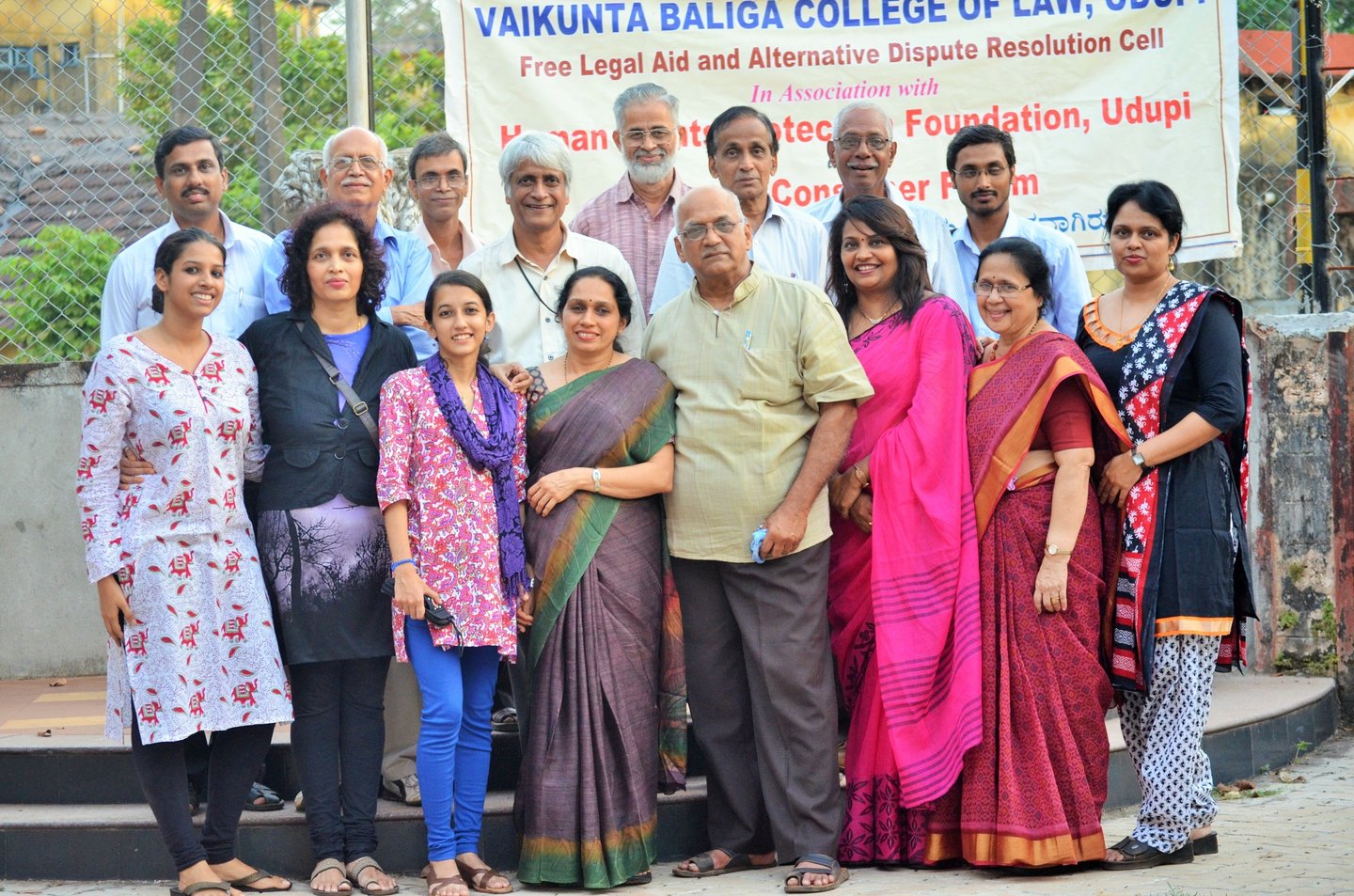
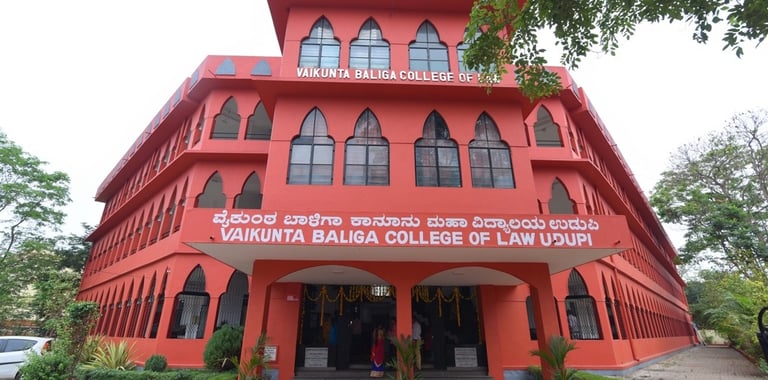
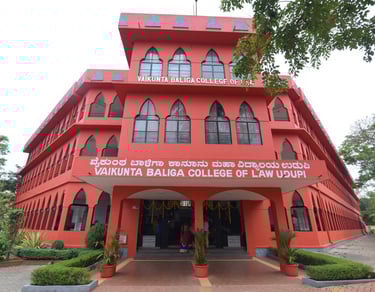
b) Observing the good work done by the Forum, the oldest private Law Institute in Karnataka, VB College of Law has provided the office premises to the Forum. Even the maintenance is being paid by the Institute.
c) Whenever more funds are required for any project or program all the members of the Trust equally contribute. Thus, the Forum has achieved financial independence with no strings attached.
As a principle, Forum does not accept any fee from the aggrieved while handling their cases. So far, Forum has not received any fund from Government or other private funding agencies. The Forum categorically opposes receiving foreign funds to solve local (our) problems.
Principle 20: The Forum shall offer services to the aggrieved absolutely free of cost.
Several consumer Organizations collect a fee to provide guidance as well as moral support to the aggrieved. Some of the Organizations even offer legal support for a fee by representing the aggrieved in the Court of Law.The Forum believes that once a fee is accepted, as per the Consumer Protection Act, 1986, the guidance given may be called as “service” and automatically the Forum becomes a service provider. Consequently, the aggrieved may sue the Forum for deficiency in service. Thus, the Forum may get into trouble for the guidance given in good faith.
The Forum never accepts any fee from aggrieved for guiding them and handling their cases. In case, a complaint must be filed in the Consumer Commission, then the aggrieved are trained to fight their cases on their own. Whenever an aggrieved is not able to pay the Lawyers‟ fee, then the Forum will pay the same. Here are the examples:1) Akku Leela case(18) 2) Kadur case(19)
3) Yogish case(20) ,4) Jayalaxmi kadri case(21), 5) Stella case (22), 6) Thaniya Shetty case
(23)
Whenever large numbers of citizens are affected or weaker section are affected, then the Forum looks after all the expenses, including court expenses for public interest litigation.
Principle 21: The Forum shall adopt cost effective operations. Every rupee is spent cautiously. Usually, social organizations spend money extravagantly for ceremonial programs. The Forum never spends money on celebrating Consumer Day, Human Rights Day, annual get- together etc., Even offices expenses are kept to the minimum.
Principle 22: The Forum shall adopt a perfect system of record keeping and filing. Proper maintenance of documents is very necessary specially when the organization deals with controversial issues. Whenever articles are published there are chances of facing charges of defamation. Therefore, all the documents and evidence related to the issues discussed and statements made in the articles shall be maintained for a long time. The Forum maintains all records in a very efficient but inexpensive way. More than 30,000 files are stored in the archives
of Basrur Consumer Forum and HRPF. Digitalization of important case papers and photographs have been completed.
Principle 23: The Forum shall declare all its publications, articles and handouts, free of copyright protection.
Informative and investigative articles are published by the Forum to educate the citizens, to create public opinion against injustice, and to protect public interest. Therefore, the information should reach the needy absolutely free through Forum‟s website. Therefore, in all publications of the Forum, it is very prominently announced that “copyrights are not reserved”. In all the compilations of articles, in the very second page of the book the following notice can be seen:
Principle 24:The Forum shall adopt a non-confrontationist strategy.The Forum never encouraged protest programmes such as Bundh ,Morcha, Dharna, Gherao etc. At times, these may take even violent turns. Protestors are even ready to get arrested, but are not prepared for any negotiations or compromise.
Wherever possible, the Forum encourages the parties concerned to settle the dispute outside the court in a cordial atmosphere. This would not only reduce the expenses involved in litigation, but saves time as well. But conciliation and mediation process are possible only in civil cases. Therefore, in most of the cases of human rights‟ violation, these procedures are of not much use. The Forum provides legal advice along with the related court judgments wherever necessary. Counseling sessions are held separately and jointly so that the contenting parties can come to a mutually acceptable decision.
Principle 25: The Forum shall be totally transparent in all its dealings with consumers as well as service provider: The Forum shall not have secret strategies while dealing with service provider and government officials, nor have any hidden agenda behind its action. All the dealings of the Forum are open to scrutiny. Each and every movement (activities) of Forum will be open to the purview of the public. Forum never approves secretive methods such as “sting operations”.
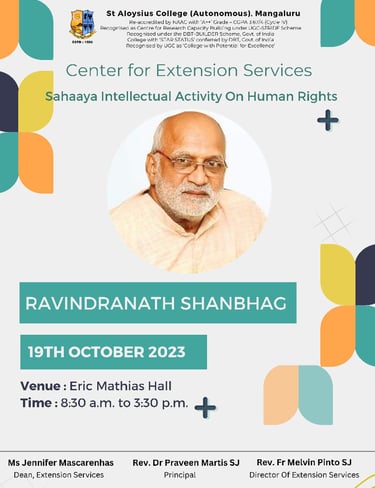
Principle 26. The Forum as well as its activists shall refuse awards, honorsand financial grants from anyone. This principle has helped the Forum increase its credibility in eyes of public.At times, in democracy, the politicians belonging to ruling party offer awards to the activists who are a potential threat to their Government. Financial grants are also sanctioned to keep the activist in good humor. This also can be termed as bribe. Therefore, activists should avoid getting into such trap. The Forum firmly believes that awards often derail the movement because personal ambition overpowers the undertakings and objectives of the movement and therefore prohibited. All forms of „person worship‟ is prohibited. Recently, one of the activists of the Forum, Dr.Ravindranath Shanbhogue refused the Rajyotsava Award announced by Karnataka Government (24).
Principle 27:The Forum shall create public opinion against injustice by following the principles of Sathya and Ahimsa. Creation of awareness regarding the rights and responsibilities of a citizen is to be followed by mobilization of opinion against injustice. This is not enough. The public opinion thus created should be effectively communicated to the person responsible for the problem or the person who can solve the problem.
Whenever an aggrieved person approaches the Forum with all the details of the case and if the Forum finds evidence of injustice, the Forum should doubly confirm that the victim has suffered a loss or injury. The Forum shall make all efforts to reach the truth. Therefore, invites the service provider‟s observation/opinion on the issue. If the service provider gives satisfactory answer
/explanations to all the issues raised and if the aggrieved person is satisfied with the answer, the case would reach a logical end.
If aggrieved is not happy and provides his version with further evidence to prove his case, then the service provider will have to suitably provide more evidence to support his stand.
Even after several such attempts the issue is not resolved and if the Forum finds that the victim continues to suffer, a detailed article is published on the injustice. Thus, the organization successfully creates the public opinion.
The public opinion thus created has to be communicated to the person concerned, in order to reach the logical end. Therefore, at the end of the article, the Forum makes a request to the readers to communicate their opinion to the concerned service provider or bureaucrat. At times, the Forum holds press conferences in which the victim is encouraged to explain his tragedy. In such cases, the public opinion created will have a greater impact since the allegation has come directly from the victim. In such operations, the organization has to conduct itself with responsibility and dignity. As far as possible, the victim should be encouraged to make the allegations and give the statement. In order to safeguard the interest of organization and the movement, the Forum shall never take any step on the basis of assumptions and circumstantial evidence.
Principle 28.The Forum shall encourage the victim by guiding him with necessary legal knowledge and empower him to fight his case on his own. It has been observed that the activists or organizations take more prominent role in problem solving process. By such approaches the aggrieved will remain inactive and inarticulate. Through a sustained campaign of empowering people, Forum has been able to earn credibility amongst the common people. Example : Guidance given to Koraga community to take leadership and solve their problem (25).
This methodology of empowering helps the victim to be independent in his fight and in the process he would know how to solve the problem. Subsequently, he can guide other similar victims and thus help in spreading the Movement. While empowering the victim the Forum shall not impose its views and methodology on victim. The aggrieved is free not to follow the guidance and instruction given by the Forum.
Principle 29:The Forum shall try to minimize the burden on already over-burdened judiciary. Most organizations as well as activists prefer to file petitions in the courts in order to protect public interest. In such efforts, although the victims may get their problem solved, they will never get educated. Since very few activists in the country involve in practicing Alternative Dispute Redressal (ADR) mechanisms, the importance of ADR has not become popular. Therefore, NGOs prefer to approach the law courts. When more and more activists come to know the types of cases handled by Basrur Consumer Forum and HRPF, the number of petitions in the law courts may reduce drastically. Consequently, over burdening of judiciary may reduce
in due course of time. The Forum prefers to resolve issues without approaching judiciary in order to save time, money and other resources of all the parties involved. Only as a last resort, the aggrieved should approach the judiciary.
Principle30 The Forum has adopted a system of flexibility and minimum organizational hierarchy. The Forum believes in having an informal Committee to perform its functions and to achieve its objectives. Usually there is a President who is the most important man in the Organization and several other office bearers who are subordinate to him. This is called Organizational hierarchy.
There will not be any additional power or authority to the President or any other office bearers. The Forum does not have a treasurer since there is no treasury (Bank Account). Since the members of the Forum are well experienced and believe in all the principles established, everyone takes the responsibility of the action taken by the Forum and thus, organizational hierarchy is minimized.
Since every Trustee is well versed with already established principles and the methodology at the very beginning itself, the cases are handled without any confusion. The Forum encourages every Trustee (activist) to handle cases independently to enrich his experience. Anyway, the Trustees with more experience are always there for guidance. For example, Mr.Muralidhar, a former bureaucrat (Tahsildar of Udupi), has more experience in handling revenue cases. Therefore, he not only handles the revenue cases received by the Forum, but also guides other Trustees. Similarly, since Dr.Shanbhogue as both Medical and Legal backgrounds, he has guided hundreds of medical negligence cases. After successfully handling, the experience gained is shared among all other Trustees. Since organizational hierarchy is almost missing and all take responsibility, Forum never conducted any elections for office bearers.
Principle 31: The Forum shall lead a movement rather than run an organization: The Forum believes that organizations are restricted by boundaries while movements can operate without any limitations. To ensure community participation, Movements play a more enabling role as compared to organizations. Since several NGOs restrict their interest only in their organization, they fail to comprehend the concept of a Movement. The experience gained by any organization handling public interest cases are to be shared with others who are interested in similar work. Only by such ideology, a Public Interest Movement can grow.
Workshops and seminars are conducted every month to spread the message and to train activists who seek guidance. For the last four decades, more than a thousand such workshops have been conducted in states such as Karnataka, Maharashtra, Goa. Uttar Pradesh, Bihar, Himachal Pradesh, Gujarat, Kerala and Rajasthan. Care is being taken that trained activists follow all the principles.
The Forum never takes responsibility of wrong methodology followed by the Activists at other places.
Principle32: The Forum shall have purposeful partnership with other NGOs/press etc.
Some problems are common to several places, and therefore, the successfully used methodology in one place can be applied to other places as well. Similarly, different organizations can work on different aspects of a problem. To achieve common objectives, different organizations can come together and successfully deal with the problems.
The Forum has partnered with many other organizations which share a common purpose. It has partnered with print media like Udayavani, Issues and Concerns etc., in order to spread the movement and create public opinion. It has also partnered with Manipal University in the distribution of reasonably inexpensive health insurance policies to the poor citizens and laborers.
Whenever a problem related to other states is reported, a communication is sent to activist working in those places for a purposeful partnership. E.g, Problems faced by Displaced Families due to industrialization.
Principle 33:The Forum shall follow the rule of inclusive problem domain. For various reasons, several organizations restrict their activities to one geographical area. Forum supports anybody in moments of crisis. Its fight is against any kind of injustice, regardless of the nature of injustice, regardless of social position of the victim, or regardless of the party that caused it.
Most of the organizations restrict their activities to certain subjects. For e.g., Trade unions usually work to protect the interest of employees. They give legal support and guide the working class whenever they face injustice. Such an organization is not equipped to help a victim of domestic violence.
Both CFB and HRPF are equipped with infrastructure to guide any type of injustice. Since the main methodology of these Forums is approaching already existing justice delivery system (established by the Government), there will not be any delay towards the redressal. Therefore, these organizations support and guide any one on approach. The only requirement is that the complainant must prove that he is the victim and is in a position to identify the offender.
The Forum never takes up any issues suo moto. The action is initiated only when a victim or anybody concerned on behalf of victim approaches the Forum.
Principle 34: The Forum shall have the path of least resistance: It was observed that the bureaucracy works only on the orders of either higher officials or of elected representatives. Even after seven decades of independence, corruption, nepotism, and inefficiency are rampant in government offices. Even after establishment of anti-corruption bureau, Central Bureau of Investigation (CBI), Lokayukta, Lok Pal etc., nothing has changed. No improvement in the
efficiency. One thing is sure that no legislations or government sponsored body can improve the situation in this country.
The Forum is of the firm opinion that activating the existing bureaucratic hierarchies to their fullest advantage is the easiest way to lead the battle against an insensitive feudal establishment. It also has been logically proved that efficiency is inversely proportional to corruption in any office. Therefore, instead of trying to root out corruption, citizens can concentrate on improving the efficiency of the system.
Whenever the aggrieved citizens approach the Forum for guidance, they are advised to write a simple letter to the officer concerned to solve the problem. Even after sufficient time and opportunity, the officer does not solve the problem, the aggrieved are advised to approach the immediate higher official for redressal. In this process every official in the hierarchy will be given all the opportunity to do his duty. In most cases the junior officer will promptly act if he comes to know that a higher official has been approached by the aggrieved party. In case the higher official also does not solve the issue, the aggrieved can go on approaching senior officers of the hierarchy. Even at this stage, the grievance is not redressed then, the Forum would extend its help to create public opinion against the injustice.
Only active involvement by enlightened citizens can ensure the quality of service from the bureaucracy. While the Forum does not expect to root out corruption in the system, it would be able to bring it down a fair bit.
In this sustained battle the Forum continues to support the aggrieved. At any stage of the battle, if the aggrieved wants to discontinue the fight, the Forum will withdraw its support.
Principle 35: The Forum shall never publish a case where the opposite party accepts their mistake and agrees to redress the disputes or compensate the aggrieved.
At times, as soon as the aggrieved communicates with the service provider with a copy endorsed to the Forum, the opposite party immediately approaches either the complainant or the Forum with a promise that he would attend the complaint immediately and solve the problem to the satisfaction of the complainant.
As per the policy of the Forum, in all such cases, no publicity shall be given so that the service providers‟ credibility will be protected. If at all the matter is published for the purpose of public awareness, it will be done anonymously without naming the service provider.
6. Comparing the procedure followed at various stages by the NGO, i.eBasrur Consumers Forum inhandling cases with that of summary trial held in the
Consumer Commission.
When the procedure followed by the NGO, i.e.,Basrur Consumer Forum was carefully analysed, it was observed that most of the steps followed were similar to that of state-owned Consumer Commission, the only difference being that the NGO conducts it informally. The following table explains the various procedure followed by the Commission and the NGO.
Requirement 1
The Consumer Commission accepts a complaint if the complainant comes within the definition of the Consumer given in the Section 2(d) of the Consumer Protection Act (CPA), 2019.
Basrur Consumer Forum accepts the complaint if the complainant comes within the definition given in page No.
4 of the PUBLIC INTEREST
MOVEMENT, a Hand book published by Basrur Consumer Form.
Requirement2
To file a complaint, the complainant should have suffered an injury or monetary loss.
The complainant should have suffered an injury or monetary loss, and he should prove that the injury or loss have a direct relation to the transaction between consumer and service provider.
Requirement3
The complainant should have enough proof to establish his case.
The complaint will be accepted only when the complainant provides proof.
Requirement4
The complainant should be residing or the transaction should have taken place within the Jurisdiction of the DCRF
The complainant need not reside in the jurisdiction mentioned by the service provider in his documents. He must be a consumer and should have suffered loss.
Procedure
Procedure
Stage1
The aggrieved person should address his complaint to the president of DCRF along with a fee prescribed in the Act.
The aggrieved person should address his complaint in writing to the president of BCF. No fee to be paid.
Stage2
Along with the original complaint, as many numbers of opponents, so many copies of complaint with supportive documents are to be
submitted to the DCRF.
Along with the complaint, one copy each of supportive documents such as brochures, bills, cash memos, opinions from the experts, reports of recognized
laboratory etc are to be submitted to
the BCF for examination in order to
support his claim
Stage 3
After receiving the Complaint, the DCRF will allot the date of the next hearing and the same will be communicated to the complainant. This is called admission hearing.
After receiving the Complaint, the BCF will examine all the documents along with the complaint. If at all any ambiguity is found in the complaint, the Forum shall invite the complainant for clarification. Most of the times such clarification is sought from the complainant over the phone to reduce the trouble of travelling and to minimize the time and expenses. This process continues till the Forum gets clear picture of the injustice faced by
the complainant.
Stage 4
After hearing the complainant, if a prima facie case is established, the judge will take decision to register the case.
If a prima facie case is established, the complainant will be asked to observe the following procedure:
(a) A simple letter is to be written to the opponent explaining all his problems. The letter should be brief and to the point (Refer: “How should the consumer frame his letter?” (14) (b)There is no necessity to endorse copy of this letter to the Forum at this stage since it is very necessary for the consumer and the service provider to interact with each other in a cordial atmosphere.
(c) If there is no reply from the service provider within a reasonable period, say 15 days, the Consumer will be asked to write one more letter in the form of a reminder, this time endorsing a copy to the Forum. “Copy submitted to the Consumer Forum Basrur for guidance and support”. By doing so he invites the NGO to intervene in the case.
(d) If the opponents do not communicate even at this stage, the consumer should inform the Forum.
Stage 5.
Notice will be issued by the Commission to opposite party
(opponents) to attend personally or through an Advocate.
The Forum shall follow with a Standard Letter to the opponent (1) to seek their point of view or version.
-If opponent replies to the letter sent by
1
the Forum, the same will be examined carefully to ascertain whether his version has any lead to reach any conclusion.
-If the opponent agrees with one or more allegations in the complaint or agrees to compensate the loss and wants us to resolve the problem, then the same will be communicated to the complainant.
-If the complainant accepts the version of the opponent, then the Forum will advise the complainant to go for an amicable settlement. Thus, the issue may get settled amicably if both the parties wish to do so.
Stage 6
Evidence: Complainant should submit the original documents such as brochures, bills, cash memos, opinions from the experts, reports of recognized laboratory etc. for
verification.
The submission of the documents and proof is done at the beginning itself.
Stage 7
The opponent can submit interrogatories to the complainant on the issues which are not agreeable to the opponent.
-If Opponent sends his version and denies the allegations, the case will enter the next stage.
-If the opponent does not answer the standard letter from Consumer Forum Basrur, one more reminder will be sent to him before the Forum proceeds to the next step.
Stage 8
The Complainant should answer all the questions raised by the opponent in support of his claim. The complainant may have to submit further evidence to support his claim.
In case the opponent does not agree with the allegations and put forward his views and explanations on certain issues which are not agreeable, the same will be sent to complainant for his comments. The complainant should clarify his stand.
Stage 9.
The complainant is also allowed to submit interrogatories for the opponent to answer.
The opposite party should submit the evidence which is in his favor. The
Complainant must address all the issues and questions raised by the Opponent in
support of his claim.
Stage10
The complainant is also allowed to submit interrogatories for the opponent to answer.
The opposite party should submit the evidence which is in his favor. The Complainant should answer all the issues and questions raised by the Opponent in support of his claim.
Stage 11
Judgment will be pronounced in the open court and communicated to both the parties.
Finally, a compromise document will be prepared wherein both the parties may sign if required.
-If, a compromise was not reached and if the Forum gets convinced that injustice has been proved, then the Forum will proceed to create public opinion against the injustice.
-The complainant has an option to approach the Consumer Commission.
Stage 12
Usually, three judges will decide the case.
Hundreds of readers who read the article will judge a case and communicate their opinion to the
opponent/service provider.
Stage 13
Usually, 3 to 6 months of trial takes place.
After creation of the public opinion, immediately the case reaches the
logical end.
Examples
Examples
14
1.Thaniya poojary Vs Revenue Dept. 1995-97,BIS page 1-7 & 107-117,
Manipal Printers and Publishers Manipal, 1998
Geetha Vs Union Bank of India 2004
Sanjeev Kamath Vs K E B 1980 NL Vol.1 Issue 14 dtd 1980
R. Shanbhag Vs SBI, Udupi 2019
2. Ermal Vijaya Devadiga, Mumbai, 1970 -1998 Vs Railway Ministry
3. Janaki, Cherkadi, Udupi District 2001-2002 Vs Education Dept.
Jamila, Cherambana, Madikeri 2003 Vs Employer at Muscat
MahoharaKoraga, Nittor,Udupi Vs Revenue Department ShantharamGaniga, Shiroor, Udupi Poornima Bhandari,Kundapura Vs Karnataka University 1986-91,JMY 106-123, Published by Consumer Forum Basrur
Vanaja Acharthy, Ucchilavs.Zilla Panchayat JMY page 37-40, Published by CFB, JMY page 28-36, Published by CFB.
EllurRamananda Rao Vs Forest Department
7 .Comparison of functioning (risk factors and responsibilities) of NGO (Basrur Consumer Forum) and to that of State owned Judiciary (Consumer Court).
One of the questions to be answered in this project was whether there are any risk factors to the activists in running the organization or the movement. To answer this question, it was necessary to study the objectives of the organization along with safety measures embodied in the procedures and code of conduct laid by the organization.
Following questions raised by the participants during the workshop conducted by the Forum and answers given by the guide will clarify the matter to a certain extent.
Q 1. Did any one threatened the office bearers of the Forum while handling the cases?
Ans: For the last 40 years, more than 41,000 case have been successfully handled by the Forum. We are proud to declare that not a single threatening call received by any of the case workers so far. The precautions to be taken by activists have been explained in chapter 11 (i) of this report. Q 2. Was there any defamation case against the activists or organization for action taken against the offender?
Ans: More than 4000 articles have been written and more than 800 seminars/public meetings have been conducted to create public opinion against the injustice done by the service providers as well as government officials. Not a single case has been filed against any of the article or any of the action taken by the Forum.
3.What precautions the activists have to take while handling any case?
Ans: Every activists who handle the case have to adhere to the principle laid down by the Forum. Chapter 11(ii) of this report lists out all the 34 principles.
The code of conduct has to be strictly followed by each Trustee as well as the volunteers involved in Forum‟s work.
Q 4. Does an activist or the organization get any protection under „Act done in good faith‟?
Ans: The Advocates who appear on behalf of their clients are legally representing their clients. Therefore , the Advocates are considered as officials of the court along with the judicial officers. So any errors that may creep in during the legal procedures are protected under „act done in good faith‟. But no such protection for Activists who struggle to get justice to the victims who approach the Forum. Therefore, the Activitsts can not afford to make any such errors. If at all, there is a factual error while presenting the case in an article or arguing in support of a victim the Activists have to be doubly sure about the facts. In detail research is very much needed to avoid any defamation case or a legal action.
Q 5. How to handle cases involving controversial issues?
Ans : The relationship between an Advocate and the client is totally different than that of an Activist and a victim of injustice. The Advocate‟s role is to amplify whatever his client claims. Whether the client is an offender or a victim does not matter to him. He explains the Court his
client‟s version in legal terms and assists the court to reach a decision. He is not responsible for the misdeeds or offence committed by his clients.
Whereas an activist never represents an offender, his struggle is to protect the victim from injustice. Therefore, he has a responsibility to investigate the case in detail to find the truth. He is also duty bound to prove the case on the basis of documents and evidence. A thorough research has to be done before any action especially in cases involving controversial issues.
The Activist is not a judicial officer and therefore, personally responsible to prove the case and for any material published in Media. Therefore, he will not get any protection under „Act Done in Good Faith‟
8. Comparison of various aspects of State owned Judiciary (Consumer Court) and NGO (Basrur Consumer Forum)
The complainant files the case in a Consumer Court. The Advocate assists the complainant to fight the case as per the provisions of the Consumer Protection Act.
The complainant approaches the NGO with his complaint. The Activist analyses the case and educates the complainant to negotiate with the service provider. If the problem is not solved, the Forum intervenes. If problem persists the public opinion is created to get the justice. As a last resort the issue may be taken to judiciary.
Advocate handles the cases following the procedures laid down by the judiciary.
Activist handle the cases on following the methodology designed /adopted by the NGO.
Advocate analyses the case of his client and presents the case in legal terms and assists the court to come to a conclusion. Judges decide the case.
Activist confirms that the complainant has suffered injustice. Then, assists the organization to solve the problem through negotiation. If the problem persists, the public opinion is created against the injustice and bring it to the notice of general public. Citizens decide the case
Officials are protected under „Act done in good faith‟. Therefore, no case against judicial officers and Advocates for defamation.
No such protection to the Activist and the NGO. Therefore, always at a risk of facing charges of defamation.
The cases are decided as per the provisions in Constitution of India, Court judgments and Legislations
The cases are decided as per Natural Justice. The opinions expressed in Court judgments,
Constitution of India and Legislations are taken in to consideration.
Legislations are strictly followed.
Legislations are guiding force
Punishment and /or penalty are the threats to
offenders
Loss of credibility due to Public Opinion
created is the treat to offenders
9. Efforts made by the NGOs to spread the movement, train the Activists and to form a network throughout the country.
It can be observed that the Forum has led a movement rather than running an organization for the last four decades. Organizations are restricted by boundaries while movements can operate without any limitations. To ensure community participation, such an ideology plays a more enabling role as compared to running an organizations.
Workshops and seminars are conducted every month to spread the message and to train activists who seek guidance. For the last four decades, more than thousand such workshops have been conducted in states such as Karnataka, Maharastra, Goa, Uttar Pradesh, Bihar, Himachal Pradesh, Gujrath, Kerala and Rajastan. Care is being taken that trained activists follow all the principles as well as code of conduct. Any way both CFB and HRPF do not own any responsibility of any problem that may creep in due to not following both of these.
Number of workshops conducted by CFB and HRPF
Year
Seminars
conducted
Workshops held
No. of Trainees
attended workshops
Activists worked during
the year
1981
62
0
0
4
1982
56
2
69
6
1983
52
4
146
8
1984
44
3
95
12
1985
65
4
176
16
1986
62
2
76
16
1987
56
3
132
22
1988
72
3
126
17
1989
75
4
164
16
1990
62
8
270
12
1991
60
12
480
13
1992
56
18
612
16
1993
37
24
896
17
1994
62
18
812
15
1995
63
21
1048
16
1996
102
32
1380
14
1997
72
36
1484
23
1998
86
28
925
18
1999
62
26
1426
18
2000
67
29
1876
19
2001
65
36
2116
16
2002
68
27
1026
16
2003
56
23
912
12
2004
78
20
815
13
2005
83
22
915
14
2006
86
20
1033
14
2007
14
24
1320
16
2008
9
26
1212
14
2009
12
48
2050
15
2010
14
24
486
6
2011
26
22
615
5
2012
14
20
726
7
2013
48
24
602
9
2014
46
12
486
12
2015
32
14
1714
9
2016
18
8
680
6
2017
13
15
810
7
2018
36
12
1012
8
2019
32
16
860
8
2020
3
2
102
6
Total
2026
692
31685
In reality, even though more than thirty one thousand trainees attended the workshops conducted till 2020, the forum could get very few hundreds of volunteers. Some of the volunteers though do not take part in day to day affairs they step in whenever their services are required. For example, there were several occasions wherein Indian laborers got into trouble in Gulf countries due to illiteracy or not knowing the law of those countries. We have instances wherein young girls were human trafficked to such places. Whenever HRPF receives the grievances of such people, the volunteers in Gulf countries step in and help the Indian citizens on the request by HRPF.
Whenever the Forum conducted any seminar or workshop, care was taken that every activist could work independently without the help of Consumers‟ Forum, Basrur or HRPF. If at all any activist went wrong in his approach, the Forum did step in and guided the activist to put the case on the right track. Even though the Forum never took responsibility of wrong methodology followed by any Activist, but certainly guided him whenever guidance was sought.
10. Analysis on growth of popularity as well as success rates for the last 40 years.
One of the greatest achievement of the movement has been invention of a modus operandi which is non-violent, issue based, apolitical, result oriented and absolutely transparent. This has a major contribution in the success rate of the cases handled.
The column writings contributed by the Forum in various news papers, a well designed website and other publications of the Forum are mainly responsible for the popularity. Those who read the success stories in these publications identify themselves and approach the Forum for guidance and support. The victims who came out victoriously in their battle against injustice are the real ambassador of the Movement.
The popularity of the Forum has attracted students from various law Institutions. Apart from seminars and workshops, short term training courses on consumer and human rights movements are offered to the law students during summer vacations. Other citizens who are interested in activism are also allowed for these programmes.
Even though 692 workshops were conducted and trained over 31,000 trainees for the last 4 decades, only few hundreds have been involved in the Movement. The reason for this small number of Volunteers can be primarily attributed to the Principles laid down and strict adherence to the code of conduct framed by the Forum.
Many of the full time volunteers are persons retired from Banks and other financial Institutions. Even retired professionals such as doctors, engineers and lawyers serve this movement as advisers. Students are the part time volunteers who participate mainly during investigations, surveys and awareness programmes. Some of the students from Law Institutes are being trained by our lawyers at the court halls of Consumer Commission.
Growth of popularity as well as success rates can be attributed to the following:
a) It can be observed that the volunteers who opted to be with the movement were to be highly principled and dedicated.
b) While handling the cases, these volunteers have been trained to be neutral and therefore, never involved in personal grudge, political vendetta, wrangler, character assassination, etc.
c) None of them accepts gifts, awards, remuneration in return. Activists work for the Movement without taking any personal credit.
d) The activists never accept any case unless a proper assessment was made by going through all the related documents.
If at all, a complaint was accepted for guidance and subsequently the complainant made unsubstantiated charges against the service provider, the Forum would hold him responsible for flaws and carelessness. Consequently, even the support offered would be withdrawn in the best interest of justice. At times, such cases were even published to send clear messages to those involved in irresponsible and illegal activities.
e) While dealing with individual cases, the Forum strictly follows its principle of passive activism. i.e unless the aggrieved takes initiative, the Forum never guides or supports the aggrieved. It offers the guidance and lends support to the victim only on his request. The support would continue as long as the victim fights his battle.
f) The Forum would never encourage any aggrieved to develop dependency. The Forum never allows the aggrieved to transfer the responsibility on the shoulder of the Activist. The Forum never decides whether an aggrieved has to fight the case or not. Both the consequences shall be explained to the complainant. Only the aggrieved should decide whether to fight or to surrender.
g) The Forum always encouraged the victim by guiding him with necessary legal knowledge and empowered him to fight his case on his own. Through a sustained campaign of empowering people, Forum has been able to earn credibility amongst the common people. Ex, Guidance given to Koraga community to solve their problem at Kondadi Koraga colony was the one of the best example in this regard (25).
h) The Forum adopts a non-confrontationist strategy. Wherever possible the Forum encourages both the parties to settle the dispute outside the Court in a cordial atmosphere. This would not only save the expenses involved in litigations but saves time as well. Effective conciliation and mediation sessions have been conducted in several cases (32% of the total cases handled). Examples: Dr.Shanbhogue has been appointed as conciliation officer by the Senior Citizens Protection Tribunal. Prior to enquire at the Tribunal, the President sends files for conciliation to the Forum. At the conciliation meeting, both the parties would be advised to arrive at a settlement. They would be explained the consequences of the failure of conciliation. Thus, most of the time, the litigants prefer to settle the matter before Tribunal passes the judgment.
Other cases of this caregory are Kapu temple case(26), Hosangadi KEB case(27), Revenue cases in Udupi and Kundapur Taluk offices(28), Radha Mallya case (29).
The Forum has always preferred to resolve issues without approaching State Judiciary in order to save time, money and other resources of all the parties involved. It is very important to mention that the Forum provides necessary legal advice along with the related court judgments wherever required. Counseling sessions are held separately for each litigant and jointly involving both of them so that the parties could come to a decision without wasting time. The Forum never attempts to threaten the parties to respond or withdraw the case under any circumstances. Again,
the Forum never imposes its view on any party and never pressurizes the victim for unreasonable settlement.
i) For smooth functioning of the organization and for effective public relations with the litigants, the forum has introduced several reforms. The Forum has adopted the system of minimum organizational hierarchy. There is no additional power or authority to the President or any other office bearers. The Forum does not have a treasurer since there is no treasury (Bank Account). Since the members of the Forum are well experienced and believe in all the principles established, everyone takes the responsibility of the action taken by the Forum and thus, organizational hierarchy is minimized.
j) Since every Trustee is well versed with already established principles, the cases are handled without any confusion. Thus, a complainant will get the same solution by approaching any activist in the Organization. The Forum encourages every Trustee (activist) to handle cases independently to enrich his experience. Anyway, the Trustees with more experience are always there for guidance. For example, Mr.Muralidhar, a former bureaucrat (Tahsildar), has 40 years of experience in handling revenue cases. Therefore, he not only handles the revenue cases received by the Forum but also guides other Trustees in handling cases related to Revenue Act. Similarly, since Dr.Shanbhogue has both Medical and Legal back ground, he has guided hundreds of Medical negligence cases. After successfully handling, the experience gained is shared among all other Trustees.
Trustees are carefully selected depending upon their knowledge and experience. Initially, one has to be volunteer till he learns all the techniques of mediation and ADR processes. The Trustee, who can afford to give more time and are willing to take more responsibility, are encouraged by all others. Since organizational hierarchy is almost missing and all take responsibility, Forum never conducted any elections for office bearers.
k) The Forum has successfully partnered with several NGOs which share a common purpose. Whenever problems were found to be common in several states, certain techniques developed at one state were used successfully to tackle those issues in other states. For examples HRPF has found that displaced families in several projects all over India have suffered due to non compliance of applicable policies. Similarly, the Forum has joined with National Council for Environmental Protection (NCEP) to proceed legally against several project proponents.
It had partnered with daily and other periodicals like Udayavani, Issues and Concerns etc. to create public opinion against injustice. From 2002 to 2019, the Forum had supported the Manipal University in distribution of health insurance policies to the poor citizens and unorganized laborers. Whenever a problem related to other states reported, communication were sent to activists working in those places.
In 2008, a huge consignment of grapes was rejected by European Community with a reason that the pesticidal contents are more than accepted limits. Farmers as well as Grape Growers‟ Association suffered huge loss. Dr.Shanbhogue was invited to various grape growing areas of Maharastra to educate the farmers and to avoid such as incident in the future. This was a very useful partnership between two movements.
l) Most of the Organizations restrict their activities to certain subject or certain geographical area. In the initial stages the Basrur Consumer Forum restricted its activities by solving consumer issues or simple cases of torts. Developing a fool proof methodology to solve citizen‟s problem was more important than tackling complex issues.
After a decade of experience the Forum could develop a modus operandi that was legally valid and constitutionally accepted. When the cases pertained to environmental degradation, atrocities on weaker section of the society, abuse of women and children, human trafficking etc. were received, a consumer organization was not an effective Forum. There was need for a Human Rights Protection Organization. It was also necessary to improve the work strategy after the cases of human rights are included in the Movement. Hence, in 1992, separate Forum called Human Rights Protection Foundation was established to solve cases related to Human Rights. Its fight is against any kind of injustice, regardless of the nature of injustice, regardless of social position of the victim, or regardless of the party that caused it. Prime objective is empowerment of weaker section of Indian society; concentrating mainly on ameliorating women, children, backward caste and backward communities into main stream. 2012 onwards, the Forum became popular in handling cases of atrocities on senior citizens. For the last 8 years, more than 700 cases of senior citizens have been handled.
1. To handle human traffic issues, HRPF partnered with the Kannada Associations of Saudhi Arabia
2. To create awareness against domestic violence, in 1996, HRPF entered into a MoU with an organization called „Samanvaya‟ which had an objective to tackle all sorts of marriage disputes. This partnership continued up to 2002. Later, „Samanvaya‟ functioned independently in several cities of India such as Bangalore, Mangalore, Mumbai, Delhi and Kolcutta.
Now, both Basrur Consumers‟ Forum and HRPF are equipped with infrastructure as well as expertise to guide any type of injustice. Since one of the methodology of the Forum is to approach already existing Govt. sponsored Legal Assistance Agencies such as senior citizens
help line, Department of women and children welfare, Free Legal Aid Authority etc, the task has been easier. In turn these agencies provide Advocates to fight the cases in civil and criminal courts as well as consumers commissions established by the Government. Therefore, the Forum could support and guide any one those who approach with grievance. The only requirement is that the complainant has to prove that he is the victim who has suffered a loss and is in a position to locate the offender.
Meanwhile, the Forum never approached any persons who are suffering due to the unreasonable policies of the Government, wrong decision by the bureaucrats etc. Here, it is very clear that the victims are suffering not due to lack of awareness. They are suffering by choice. In such cases, the Forum never approached the victims to give them Unsolicited Advice.
In other words, the Forum has never taken up any issues suo motto except in cases where the victims and their family in total distress conditions. For eg Endosulphan tragedy. (17) In this case, the action was initiated by the Forum when Dr.Mohan Kumar, a practicing doctor from Perla village of Kasaragod District published an article regarding sufferings of the villagers from unusual diseases. A team of scientist appointed by the Forum investigated the tragedy for more than 14 years before a PIL was submitted at Supreme Court of India by HRPF. Ultimately, the Supreme Court banned the use of this environmental pollutant called Endosulfan. On the basis of this Supreme Court judgment, HRPF filed a petition in Karnataka High Court and could get compensation to each and every child suffering in the tragedy.
The following table explains the number of complaints received each year and the number of cases solved for the last 40 years (From 05.05.1980 to 05.05.2020)
Year
Complaints Regd.
Back log
Total complaints
Reached logical end
Remained unsolved
1980-81
8
0
8
3
5
1982
10
5
15
9
6
1983
22
6
28
13
15
1984
57
15
72
29
43
1985
77
43
120
46
74
1986
89
74
163
62
101
1987
201
101
302
87
215
1988
376
215
591
229
362
1989
772
362
1134
586
548
1990
1163
548
1711
1021
690
1991
1236
690
1926
1026
900
1992
1346
900
2246
917
1329
1993
1316
1329
2645
1026
1619
1994
1248
1619
2867
2016
851
1995
1036
851
1887
1115
772
1996
1318
772
2090
906
1184
1997
1216
1184
2400
1112
1288
1998
2026
1288
3314
1586
1728
1999
2881
1728
4609
3148
1461
2000
3483
1461
4944
3314
1630
2001
2846
1630
4476
3070
1406
2002
2244
1406
3650
2116
1534
2003
2364
1534
3898
2075
1813
2004
2653
1813
4466
2175
2291
2005
2816
2291
5107
1452
3655
2006
1424
3655
5079
1326
3753
2007
1598
3753
5351
1576
3775
2008
1228
3775
5003
1242
3761
2009
212
3761
3973
314
3659
2010
210
3659
3869
362
3507
2011
273
3507
3780
304
3476
2012
216
3476
3780
463
3327
2013
510
3327
3837
412
3425
2014
617
3425
4042
476
3676
2015
535
3676
4211
646
3565
2016
412
3565
3977
514
3463
2017
484
3463
3947
476
3471
2018
395
3471
3866
515
3351
2019
610
3351
3961
564
3117
2020
106
3117
3223
386
2847
Total
41634
38715
Analysis: One can observe that handful of cases were received in the initial stages of existence of Consumers Forum Basrur. As the popularity and success rate increased, the credibility also increased, consequently, the inflow of the complaints.
In 1987, there was a steep increase in the number of complaints received. This can be attributed to the launching of „Balakedaarara Shikshana‟, a fortnightly published by Consumer Forum Basrur.
In 1992, when Human Right Protection Foundation was established, again there was a steep increase in the number of cases.
During 1998, the number cases received was almost doubled and this can be attributed to publication of a weekly column „Bahujana Hithaya and Bahujana Sukaya‟ in Udayavani daily.
Whenever there was an important event and launching of new project took place, the credibility of the Forum increased which led to the increase in number of cases. The important events are given in the following table. On 05.05.2020, number of cases registered in our records shows 43,794 and the cases reported to be solved were 31,215. That does not mean 12,579 cases were not solved. In most of the cases, if the cases were solved, it was not reported to the Forum by the complainants. Therefore, a sample survey was carried out by calling the complainants registered during 2017 and during 2018. About 28% of the complainants did not inform the Forum in spite
of getting their problem solved. This type of behavior in the complainants could not be explained.
Milestone
Milestones in the Public Interest Movement
Important events and achievements during the last 40 years of journey.
1980
Establishment of Consumers‟ Forum at Udupi & Basrur
1981
Fortnightly Journal Balakedaarara Vedike Launched. Dr.Shanbhag was the first editor.
1981
Consumers‟ Forum started conducting workshops to train the activists.
1981
Consumer movements spreads to six towns in South Kanara Districts
1982
First PIL was filed in the Supreme Court. A Letter from Forum was accepted by
Justice P.N.Bhagvathi of Supreme Court as writ petition in a case wherein 600
teachers of Mangalore were denied their Provident Fund for 12 years. Supreme Court
ordered the Karnataka Govt to pay the Provident Fund accumulations along with
compound interest.
1983
A handbook for activists was released.
1984
A scientific project launched to assess the water pollution of Thungabadra River. Report
published lead to PIL in Supreme court of India.
1986
Fortnightly Journal Balakedaarara Shikshana launched to spread the awareness
throughout Karnataka.
1987
Consumer movement spreads to six different Districts of Karnataka
1989
Report published on Functioning and Administration of Karnataka State Road Transport
Corporation
1989
Report published on analysis of various schemes launched by Ministry of Forest and
Ecology
1990
Environmental movement in South Kanara launched .Dr. Shanbhag published 22
articles on Industrial Pollution and environmental protection. A book on compilation of
these articles were published.
1991
Report on Functioning of Karnataka Univeristy, Dharwad
1991
Report published on Fake Universities in India
1992
Human Rights Protection Foundation formally registered at Udupi. [HRPF]
1992
Research Paper on Historical perspective on „Red tapism‟
1992
Report published on Inflation and Price raise
1992
Analytical Report on work culture in Government Establishment
1992
Scientific Report on use of Iodine Salt
1993
Teak wood scandal in Southern States of India.
1993
Report Published on “How to protect the sanctity of Doctor –Patient relationship”
1993
Report on efficiency of Karnataka Electricity Board
1994
Report Published on “Implementation of Social Welfare Schemes of Government of
Karnataka”
1994
Analytical Report on Schemes published Ministry of Forest and Ecology on „Eco
Tourism‟.
1994 First Counseling Centre “Samanvaya‟ established in Udupi under HRPF to tackle family disputes.
1994
Report published on Functioning of Tourism Development Corporation of Karnataka
1994
Study Report on „Industialization and Disasters in India‟
1995
Report on efficiency of Karnataka Electricity Board.
1996
Analytical Report on “Duties and Responsibilities of IAS officers”
1996
Karnataka Govt. appointed Dr. Shanbhag to investigate Bidar Industrial Tragedy .His
recommendations were accepted by Karnataka Govt. and compensation was paid to the
victims .
1996
Analytical Report on Duties & Responsibilities of IAS officer
1997 Weekly Column in Udayavani started : Bahujana Hitaya Bahujana Sukhaya on 15th August 1997.
1998 Publication of first compiled essays: Bahujana Hitaya
1998 Dr.Shanbhag takes over the Editorship of Morning News,University sponsored English Daily from Manipal
1998 Endosulphan victims found in Perla village of Kasaragod District of Kerala.
1998 Research Project launched on „Endosulphan Toxicity‟ at Kasturba Medical College, Manipal
1999 Represented India at the UN Sponsored Consumers‟ Meet at Colombo.
1999 A petition was filed in Karnataka Administrative Tribunal on behalf of Akku-Leela, two scavengers who worked for a basic salary of Rs.15 per month for 27 years.
2000
Second book of compiled essays: Bekkithe Ee Pariya Swatantrya
2000
Visit to USA to protect a young Indian imprisoned in Detroit jail.
2000
Scientific Report on “Plastic: An Environmental Pollutant”
2001
Addressed several seminars on Human Rights in U.S.
2001
Endosulfan victims were found in 4 taluks of South Kanara District.
2001
Analytical Report on “How to save youths from Lottery Addiction
2002
Visited various districts of Karnataka and Kerala to investigate and evaluate
Endosulfan
disaster
2002
Released Krishna Pujari from Saudi Arabian Jail
2002
ICMR confirms Endosulfan toxicity: Kerala High Court Bans Endosulfan.
2002
Report on Asian Development Bank and Infrastructure Projects in Karnataka
2002
Report on Asian Development Bank and infrastructure projects in Karnataka
2003
Third book of compiled essays: „Jana Jagruthiya Maha Poora‟ published.
2003 Launched awareness campaign on human trafficking . Released 13 girls at Mangalore hailing from Bihar and Jharkhand who were working as maid servants.
2003 KAT passed a judgement in favour of Akku and Leela ordering Karnataka Govt. to regularize their services and pay the arrears of salary from 1971to 2003.Karnataka Govt. appeals to High Court.
2003
Scientific Report on „Mineral Water‟
2004
Awareness campaign was launched against medical negligence.
2005
Awareness campaign was launched regarding protection of labourers migrating to the
Middle East.
2006
Akku-Leela get the second judgment in their favor by Karnataka High Court confirming
KAT order.
2009
Launched awareness program on Pesticidal Toxicity throughout India. The awareness
programs were held in Maharashtra, Himachal Pradesh, Rajasthan, Haryana and Gujurat.
2010
Supreme Court ordered Karnataka Govt. to regularize the services of Akku-Leela and
pay their salary arrears.
2001 Endosulfan tragedy
2011 A petition was filed in Supreme Court of India to ban endosulfan.
2012 A petition was filed in the Karnataka High Court to release the pension for endosulfan victims. High Court passes the order to pay compensation to the victims, appoints an amicus curie and monitors the rehabilitation program.
2012 The production and distribution of endosulfan was banned throughout India. 2013 Campaign against atrocities on Senior Citizen Launched
2013 ADR cell established in Vaikunta Baliga College of Law Udupi
2013 Since Karnataka Govt. did not obey the Supreme Court orders in Akku-Leela case, a contempt petition was filed.
2013 Documentary on Ethinahole released 2013 Documentary on Hemavathi Released 2014 Documentary on Endosulfan Released
2014 Awareness program on Right to Information Act.
2014 Akku-Leela ultimately get justice receive salary arrears and also received their pensionary benefits.
2014 Launched awareness campaign on hazards of Self-Medication with LIVE case presentation on electronic media.
2014 Campaign against atrocities against Senior Citizens, Filed more than 160 cases in various tribunals in Karnataka.
2014 Awareness programme on „Dangers of Self Medication‟ 2014 Save Netravathi - Compaign against Eththina Hole project 2014 Senior Citizen Savithramma gets justice
2015 Safe pregnancy programme lunched.
2015 MRPL land losers get justice after 23 years of stuggle 2015 Senior Citizen Subraya Kamath gets justice
2016 Documentary on Akku- Leela Released 2016 LIC Micro Insurance Policy scam exposed
2017Campaign against human trafficking was launched in Udupi jointly with District
11. Factors attributed to increase the credibility of the Movement
11 (i). Code of conduct being followed by the activists in letter and spirit
The Forum insists that every person who would like to become the Activist/volunteer of the Forum should carefully understand and follow the code of conduct designed.
1. The Forum as well as activists should not promise to solve all problems in the community.
2. Every activist should understand that the Forum is neither a charity organization nor a moral crusade. For example, the Forum does not conduct free Medical camps, donations are not given to poor people. Felicitation functions are not conducted to congratulate victorious consumers.
3. Impractical ideas such as rooting out corruption, abolition of nepotism etc are beyond the scope of the Forum but it should be committed to get justice to the victims who approach with a complaint that he has not received his lawful entitlements. The activist has to get satisfied with the facts presented. For example, A complainant approached the Forum that he was a member of displace family and he did not get a job as per the package given to land losers at a industry established at Mangalore. After a careful perusal, it was found that even though he was a member of the displaced family some other member of the same family was already recruited. Therefore, he was not entitled for a job.
4. Activist should never give an impression that the Forum provides service (Seva) to any one those who approach. For example, does not pay someone‟s utility bills or provide any other such service.
5. While guiding an aggrieved or tackling an issue, the activist should not indulge in lose talks. He should not make any unsubstantiated charges in all his communications as well as his actions.
6. Activist should not take responsibility for lapses, carelessness, illegal activities and harsh language used by the complainants.
7. The activist should not guarantee success while guiding the victim. Usually, the legally accepted guidance is provided on the information and documents provided by the complainant.
8. Neither the Forum nor the activists should take any credit or blame for the consequences resulting from the guidance offered in good faith.
9. Activist should provide only the guidance. Aggrieved should take decision whether or not should he proceed as per the guidance given.
10. The activist should not get involved in anyone‟s personal disputes or legal conflicts with opposite party unless he is convinced that these disputes and conflicts initiated as a direct result of action taken by the Forum.
11. It is very necessary that every activist working for the Forum should exhibit exemplary behavior. There should not be any gap between his words and actions. Lack of integrity and commitment will result in loss of credibility.
12. An activist should have clarity regarding the objectives. For example, an activist cannot be successful if he involves in unnecessary rituals without proper results, excess of procedures than substance, big claims & less achievement, unnecessary propaganda and fighting for the position. All these will have disastrous effect on the very existence of the Forum.
13. An activist may have inclination towards any political ideology or inclination towards any religion. But when he guides a victim he should not involved in communalization of any issue, character assassination and defamation of any individual or institution.
14. Misuse of position will attract legal action against the Forum as well as the activist, ultimately resulting in collapse of the movement.
15. Role of an activist in a problem solving process has to be like catalyst in a chemical reaction. A catalyst speeds up a chemical reaction but remains unchanged at the end of the reaction. Similarly, an activist should be neutral and remain unaffected throughout the negotiation. For example, during counseling sessions, an activist should not be emotional. He has to act only as a mediator in a mediation process but should never get involved with either complainant or with opponent.
It is observed that whenever the activists deviated from either established principles or methodology, not only the cases did not reach the logical end, even the credibility would be affected.
11 (ii). Strict adherence to the principles established
1. While handling controversial issues, neither the Forum nor the activists have become controversial. Complaints were analyzed wherein issues were separated from each other and proper guidance is offered, then both the parties could identify the solutions on their own.
2. None of the activities or programmes conducted by the Forum has crossed principles of
„Ahimsa‟ (Non violence). Neither has it allowed the aggrieved to exhibit extremes of reaction. The Forum always demonstrated balanced approach.
3. The Forum never encouraged people protesting by following rituals like Dharana, Morcha etc. and educated them about result oriented approach. Aggrieved were encouraged to adopt ADR methods developed by the Forum.
4. The Forum has not supported any complaint which does not have proper evidence. Whenever the documents are not available, the Forum guided them how to get them or create them.
5. The Forum never projected itself as a charity organization and never supported any citizen who begged the bureaucrats for certain favors. The Forum opposed politicians whenever they announced freebees. Such appeasement of any group or any religion for political gain is against democratic principles. Meanwhile, the Forum supported whenever citizens demanded their rightful entitlements.
6. The Forum never claimed that Forum‟s methodology is flawless and superior to other methods of justice delivery. The Forum certainly proved that its methodology is legally valid, comparatively less time consuming and inexpensive. Even then the aggrieved has to choose the methodology acceptable to him.
7. One of the major reasons for the success of the Forum is its apolitical image developed for the last four decades. Affiliation of the Forum or of its Trustees to any political party or any political ideology makes it difficult to oppose certain issues.
8. Another striking policy of the Forum is protection of the privacy of the complainants. Most of the human rights cases tackled by the Forum, specially atrocities against women and children, the identity of the victim should not come into public domain. In more than twenty cases of human trafficking, the details of the victims were published only when necessary for authenticity. Even when published, only with permission of the victim. This sort of protection may not be possible when cases are fought in a court of law.
Example: Recently a lady called Jacintha from Karkala was human trafficked to Saudhi Arabia, the Forum successfully brought her back to India. In this case there was a necessity to educate people that how to prevent such incidences. Therefore, the Forum called a press conference and publicity was given both in print and electronic media. In this case, there was no necessity to maintain privacy since victim herself came forward to create public opinion. In several other cases of human trafficking even though publicity was given, the identity of the victim has not been revealed.
9. The activists as well as Forum have refused several awards, honors and financial grants from Government as well as private agencies. This principle has helped the Forum to increase the credibility in eyes of general public. The Forum firmly believes that awards often derail the movement because personal ambition over power the undertakings and objectives of the movement. All forms of „person worship‟ is prohibited. Recently, one of the activist of the Forum, Dr.Ravindranath Shanbhogue has refused the Rajyotsava Award announced by Karnataka Government (24).
This principle has restricted the people to join the Forum since it has been a trend that people join social organization to get recognition and with political ambitions. Even though number of volunteers are so small, they are found to be efficacious and dedicated.
10. Transparency has been maintained by the Forum in all its activities in the last 40 years. Even though both the Organizations do not coming under the purview of RTI Act, the citizens were provided with all the information available whenever demanded. All the dealings of the Forum are open to scrutiny. Each and every movement (activities) of Forum has been open to the purview of the public. There was no necessity for Forum to have secret action plans in last four decades.
12. Use of Media in educating the citizens, creating public opinion against injustice and to improve the efficiency of
public utility
Before assessing the performance of the Forum in respect of fulfilling its objectives, it is better to recall all the four objectives.
i. To educate consumers to protect their rights and interest
ii. To cultivate a sense of responsibilities among Consumers and Services providers
iii. To support the consumers in their struggles to get justice.
iv. To give regular feedback regarding the performance of various Governments owned utilities and other service providers.
The first two of the four objectives are about educating and bringing the awareness in the public. In all its activities, the Forum has concentrated on first two objectives. The number of articles and books published in the last 4 decades show that the movement has successfully educated the citizens about their rights and responsibilities. Even the Service providers/Government Officials have been sensitized to a certain extent. The number of TV programmes, press reports and the videos published by the Forum substantiate this claim.
The success rates of the cases handled and settled out of court clearly reveals that Forum has fulfilled its third objective of creating sufficient public opinion against the injustice. In certain cases where in it would have been difficult to get justice through judiciary, the victim could get justice by the Forum using methodology developed. While handling the cases of Poornima Bhandari Vs Karnataka University Dharwad(30), Janaki Vs Joint Director of Public Instruction(31). Mythreyi Joshi Vs Syndicate Bank(32), Kondadi Koraga Colony Association Vs District Administration of Udupi(25) the victims could get justice without going through the judiciary.
The fourth objective was to give systematic feed back to service providers to increase their efficiency. All along the 40 years of its existence, the Forum not only concentrated on problem solving exercises, but was working even on increasing the efficiency of service provider as well as Government controlled utility Departments. This was possible only with giving regular feedback regarding the performance of these Departments. Following examples are the proof for the achieving the fourth objective.
1 Entering into agreement with Departments like BSNL (33), KEB (34), Revenue Department(35) etc.
Example 2. Submitting the reports of the research conducted by the Forum on functioning of KSRTC(36), Various schemes of Forest Department(37)
However, improvement in the performance as well as efficiency of public utilities mentioned above cannot be attributed only to the intervention of the Forum since several other factors also have played important role. For example, allowing the private companies to compete with BSNL and dividing the Karnataka Electricity Board into smaller Companies has increase the efficiency of these public utility systems.
Further, it is observed that not enough public participation in decision making process was found in all these years. Therefore, the Movement cannot claim that it has accomplished this goal.
Only when enlightened citizen of this country, get into action, can improve the quality of service rendered by the bureaucracy. Forum does not believe in complete rooting out of corruption. But it certainly makes attempts to control the corruption within the system. In course of its functioning, Organization has not violated any laws nor has it defamed anybody.
Balakedaarara Shikshana, a kannada fortnightly published by the Forum brought out 485 issues from 1987 to 2007.
Taranga, a kannada weekly from Manipal published by Manipal Press carried 76 reports of the research conducted by both Basrur Balakedaarara Vedike and HRPF. Most of these reports where submitted to the concerned Departments as a feedback to the services rendered by them. Some of these reports were submitted to Karnataka High Court and Supreme Court of India as evidence (17).
Udayavani, a Kannada daily supported the Forum by publishing its articles in a weekly column called „Bahu jana hithaya Bahu jana Sukaya‟ from 1997 to 2010. All the three editions of Udayavani published from Manipal, Bangalore and Mumbai carried these articles. Due to these developments, activities of the Forum expanded all over the State.
Those issues could not be solved through correspondence and negotiations were published in this column. No sooner did the cases get published, letters from readers were pouring in which pushed the issues in question towards solution.
Normally, the articles published in the “Bahujana Hithaya Bahujana Sukaya” are different than other investigative articles written by journalists and published in news papers. A journalist collects the materials related to the issue, investigates and then publishes the article. The matter ends once the article is published. In very few cases, journalists publish follow up articles. But for an activists, matter ends only when the problems gets solved. Solving the problem is the primary objective of the Forum. Articles are one of the instruments to achieve this objective.
Subsequently, Vijayavani, another Kannada daily also carried „Bahujana hithaya Bahujana Sukaya‟ articles for the benefit of readers of North Karnataka region.
From 2012 onwards, the Forum improved its strategy by releasing press notes to all the news papers in Karnataka so that success stories of the citizens reach every corner of the State.
The Forum has published 4668(3122 News items,1205 articles, 182 reports and 159 press notes) articles including research reports and press notes in last 40 years. It is important to note that neither the Forum nor the activists have faced any defamatory charges by any of the service providers or the Government officials.
Table 1 Articles vs years.
Year
Media Used
News in print Media
Articles
Reports
Press notes
Radio and TV
Programmes
1980-85
BV+NP +AV+ P&J
312
72
18
32
1986-90
BS + NP+AV+ P&J
406
86
12
28
1991-95
BS + NP+AV+ P&J
468
104
17
21
1996-2000
BS + NP+AV+ P&J
564
216
35
15
2001-2005
BS + NP+AV+ P&J
538
262
24
18
2006-2010
BS + NP+AV+ P&J
562
284
28
12
2011-2015
NP+AV+WS+TV
107
96
26
17
2016-2020
NP+AV+WS+TV+WA
165
85
22
16
Total
3122
1205
182
159
News
Related to Consumer Movement, Workshops & meetings held Govt. Notifications, New Legislations and Court
Judgments
Articles
On Consumer Rights, Cases handled by the Forum, Scientific
Information useful to Consumers and Court Judgments
Reports
On Functioning of various Depts, Govt. appointed
Commissions and Public Utilities
Press notes
On cased handled by the Forum, Scientific Information useful
to Consumers and important Judgments
Abbreviations used:
BV- Balakedaarara Vedike was the first fortnightly from coastal Districts of Karnataka released its first issue on 5th May 1980. Dr.Shanbhogue was the founder and its editor for the first three
years. The objectives were to educate consumer about their rights and responsibility and to publish investigative articles on various topics of consumer interest. In the initial years, the news items and articles related only to Udupi District.
BS-Balakedaarara Shikshana The fortnightly news paper was started in 1987 June with sole objective of spreading the consumer movement throughout Karnataka State. This fortnightly was published uninterruptedly up to 2007 June.
NP- News papers: The Kannada dailies which supported the movement were Udayavani, Kannada prabha, Prajavani, Mungaru, Hosa digantha and Vijayavani. The English dailies which carried the news as well as articles published by the Forum were Times of India, Deccan Herald,Indian Express, Hindu and Gomanthak Times from Goa. The Telugu daily called Andhra Prabha, Maraati daily Tarun Bharat. Tamil daily Dinamani and Malayalum Daily Malayalum Manorama were among the other news papers which supported the movement.
AV- Aakaasha Vaani: Right from 1980 onwards, Mangalore Aakaasha vaani invited the consumer activists for contributing Radio talk on various consumer issues. From 1992 onwards, Dharwad and Bangalore centers of Aakaasha vaani started broadcasting programs on consumer movement.
WS- Website: As soon as the publication of Balakedaarara Shikshana was stopped in 2008,a website was launched by Human Rights Protection Foundation.
P&J- Commercial Periodicals & Academic Journals: Apart from publication of articles published by the Forum, the free lance authors also have contributed articles analyzing the functioning of both HRPF and CFB. Some of the periodicals which supported the consumer movement by frequently publishing are as follows: 1.Taranga, a Kannada weekly from Manipal Media Network, 2. Issues and concerns an English monthly from Suratkal,3. Sudha, a Kannada weekly from Bangalore, 4. Pax Lumina, a bimonthly from Thiruvananthapuram, 5. Mangalore Today, a monthly from Mangalore
TV- Telivision: From 2012 onwards, Spandana TV broadcasted series of programs on consumer protection for 2 years. Subsequently, channels like Suvarna, Mukta, Namma TV, TV-9, Public TV and Udupi channel started broadcasting the news of consumer interest as well as programs on cases handled by the Forum.
WA- WhatsApp : After WhatsApp was introduced, the activists of the Forum took maximum advantage. Whenever any important message to be passed to the consumers in general, Government Notifications of consumer interest, Video or Audio clippings related to the struggle by victims of violation of consumer/human rights, the Forum forward these materials to the needy.
Copyrights not reserved
Informative and investigative articles are published by the Forum to educate the citizens, to create public opinion against injustice and to protect Public Interest. Therefore, the articles published in print media are made available absolutely free through Forum‟s website.
One of the unique features being appreciated by the general public is the stand taken by the Forum regarding copyrights. Even though all the publications of the Forum are free from copyrights restrictions, the activist take full responsibility of each and every statement made in the articles, reports, and press notes. Therefore, in all the publications of the Forum, it is very prominently announced that “copyrights not reserved”. Following notice can be seen in all the books and compilations of articles published so far.
This strategy tremendously increased the credibility of the Forum. Meanwhile, the Forum does not take the responsibility whenever people publish the articles without prior approval. There are chances of the re-publisher deviating from Forum‟s principle, especially when the articles translated into other languages.
Total
41634
38715
Total
41634
38715
13. No. of cases handled by the NGOs and number of the cases referred to State Owned Judiciary
Out of 41,634 cases registered up to 5th May 2020, only 2.7 per cent of cases were taken to the Judicial or Quasi Judicial Forums for adjudication. Rest of the cases handled by either Basrur Consumer Forum or HRPF with 78% of them reaching the logical end (Note: It does not mean 22% of the cases could not be solved. In some of the cases the person complained could not substantiate his claim or he imagined that opposite party has cheated him. During interrogation by the volunteers of the Forum found that there was no illegality or wrong done to the complainant. In certain cases, the complainants are not in a position to explain the wrong done to him. In such cases, the volunteers analyses the case and educate him whether there is a cause of action or not). As per the data available with the Forum, out of 41,634 cases registered by the Forum, 38,715 cases have seen the logical end.
Following are the noticeable achievement of the Movement.
It has been observed that most of the Traders as well as Service providers in the private sector respond to the consumer grievances as well as letters written by the Forum compared to the Government officials and Government owned public utility Institutions. The reason is very simple, the traders and service providers in the private sector do not want litigation. They do not want even their credibility to be questioned. Therefore, whenever the consumer approaches them with a complaint, marking a copy to Basrur Consumer Forum, they respond immediately, at least when the Forum sends its formal letter of enquiry.
Whereas nationalized institutions like Insurance Companies and Public Sector banks do not usually respond to the grievance letters from the consumers. Whenever dispute arise in a settlement of Insurance claims or a certain amounts are to be paid for certain bank transaction, the official concern would not like to take the responsibility of the payment. At the time of audit, these cases are carefully examined by the internal as well as external auditors and if the money paid is found to be not according to the rules, the officer who took the decision will be held responsible. Therefore, concerned officials insist the consumers to get a judicial order, even when the officers in-charge understand that the problem was created by their officials or their policies.
In such situations, the Forum advices the complainant to approach the Ombudsman, Consumer Commissions or the Civil Courts. Whenever the complainant can not afford the legal expenses, the Forum provides legal assistance or services of Advocates.
At times, the citizens do not get their due because of corruption at department levels or deliberate attempts by the sanctioning officers to punish the junior employees. In such situations, the Forum certainly questions the decision taken by the officer concerned. If a consumer can not afford to approach the judicial body, the Forum provides free legal support through the Advocates in the Forum‟s panel.
Whenever large number of citizens gets affected, due to wrong policies or improper implementation of the rules prescribed, the Forum will approach the Judiciary through Public Interest Litigations (PIL). Even in such cases, the Forum provides the legal support to the victims.
Following are the land mark cases wherein the Forum intervened in dispute redressal.
Cases fought in National Level Courts: 1.Akku & Leela Vs State of Karnataka(18), 2. Susheela teacher Vs State of Karnataka (38) 3. Endosulphan Victims Vs State of Karnataka(17) 4.Geetha & others Vs Union Bank of India(39), 5. Save Western Ghat Committee Vs State of Karnataka(40) 6 Janajagrutha samithi Vs State of Karnataka (41).
Cases fought in State Level Courts: 1) Kadur case (19), High Court Order) 2) Yogish case(20), High Court Order) 3) Jayalaxmi case (21, High Court Order) 4) Stella case(22, High Court Order) 5) Thaniya Shetty case(23, In the Karnataka High Court WP No.3061: dtd:29.1.98 and In the Karnataka High Court Contempt of Court case No. 1349:98). 6) Khathija Vs State of Karnataka (42, High Court Order) 7 Jyothischandra Shettigar Vs Commissioner, Commercial Tax, Mangalore (43, High Court Order)
Whenever the complainant can afford to pay litigation expenses, the Forum provides the guidance. The complainant has to approach the Advocates to fight the case. In cases pertaining to violation of human rights, free legal assistance has been provided in deserving cases by the Advocates appointed by the Forum.
14. In several cases, the Forum has successfully reduced the time taken and the expenses to get justice.
It was important to investigate whether the Forum as Non State Judicial System can play any role in reducing time as well as expenses for litigant. About 200 cases which include violation of consumer rights and human rights handled by the Forum spreading over 4 decades were taken for analysis.
The following table explains the expenses and the time taken by the Organization to take the case to the logical end Vs how much time (approximately) it would have taken for Courts to come to a conclusion.
.
Name of the case
The Judicial body
Time would have taken in
courts
Time taken by this organizatio n
Minimu m expanses for legal battle (in
Rupees)
Expanses incurred at organization( in Rupees)
1.
Dr.P.N.S.Rao
,Manipal Vs Karnataka Housing Board 1997(44)
Consumer Court
6
month s to
1year
65 days
5000/- to
10,000/-
75/-
2.
Gloria
D‟souza,Udupi Vs Indian Institute of Ecology and Environment, New Dhelhi 1997(45)
Consumer Court
6
month s to
1year
41 days
5000/- to
10,000/-
65/-
3.
Radha bhai
Hootagalli Vs Karnataka Housing Board 1991(46)
Consumer Court
6
month s to 2 year
82 days
10,000
to 15,000
45/-
4.
Manjula,S Vs Town Municipal Council, Saagara 1991(47)
Consumer Court
6
month s to 2
year
105 days
20,000
to 25,000
150/-
5.
Krishna Acharya Vs University of Mysore,1993(48)
Consumer Court
6
month s to 2 year
72 days
5,000 to
10,000
85/-
6.
K.Narayana Vs Accountant General
of Karnataka
Civil Court
3 to 6 years
125 days
15,000
to 20,000
75/-
1997(49)
7.
Dr. V.L.Narasimhan Vs Accountant General of Andhra
Pradesh 1982(50)
Andhra Pradesh Admin.Tribun
al
2 to 5 years
60 days
25,000
to 50,000/-
60/-
8.
Margaret Ammanna Vs Commissioner of
Education 1981(51)
Karnataka Admin.Tribun
al
3 to 5 years
35 days
15,000
to 20,000/-
65/-
9.
Tarabai, Manur Vs Revenue Department,
Udupi,1997(52)
Civil Court
3 to 5 years
120 days
20,000
to 30,000/-
105/-
10.
Vanaja Acharthi,
Ermalu Vs ZP, Udupi,1999(53)
Civil Court
3 to 5 years
130 days
20,000
to 30,000/-
145/-
11.
Suresh Naik Vs.
Department of Technical Education,1998(54)
Consumer Court
1 to 2 years
30 days
5,000 to
10,000
75/-
12
Shantha Koppikar, Bhatkal Vs Dept.of small
savings,2000(55)
Consumer Court
1 to 2 years
90 days
5,000 to
10,000
120/-
13
Manoj Kumar Vs Technical Education
Board,2000(56)
High Court
1 to 3 years
20 days
20,000
to 30,000/-
185/-
14
Poornima Bhandari Vs Karnataka University,
Dharwad,1990(30)
High Court
1 to 3 years
140 days
20,000
to 30,000/-
350/-
15
Kamalamma Vs.Forest Department,1998
(57)
Civil Court
2 to 5 years
60 days
10,000
to 20,000
60/-
16
Bharamagowda Patil Vs Forest
Department(58)
High Court
2 to 5 years
90 days
15,000
to 20,000
260/-
17
Kyatherene Vs Accountant General,
Karnataka, 1999(59)
High Court
2 to 5 years
140 days
15,000
to 20,000
180/-
18
Varjenia RebelloVs Municipality,Madag
ao, Goa, 2002(60)
Civil Court
2 to 5 years
30 days
15,000
to 20,000
45/-
19
Janaki Vs Jt. Dr,
Dept of public
High Court
2 to 3
years
27 days
25,000
to
65/-
Instruction, Mysore
2002(31)
30,000
20
Vijaya Devadiga Vs Western
Railway,1999(61)
Maharastra High Court
5-
10year s
8 months
25,000
to 50,000
2700/-A
21
Ellur Ramananda Rao Vs Forest
Department(62)
Magistrate Court
2 to 3 years
60 days
15,000
to 20,000
120/-
22
Mythreyi Joshi Vs Syndicate Bank (32)
Consumer Court
1 to 2 years
15 days
15,000
to 20,000
90/-
23
Supriya Kamath Vs MESCOM(63)
Consumer Court
1 to 2 years
30 days
15,000
to 20,000
60/-
24
Venkataramana Vs Krishna Gas Agency (64)
Consumer Court
1 to 2 years
30 days
10,000
to 20,000
150/-
Cases which would not have accepted in the Mainstream Judiciary, successfully handled by the Forum
Radha mallya : In several cases, there were no judicial bodies which could be approached to tackle the problems. For example, in Radha Mallya‟s case, she approached the Forum 9 years after she paid Rs.15,00,000/- to a builder to purchase an apartment. There were no proper agreement between two parties. The builder had given a receipt for having received the amount without any supporting documents. There was no chance of getting the money refunded through any judicial body due to Limitation Act. Due to negotiation with the builder, the complainant could get her money within one day.
Jecintha Vs Ministry of External Affairs: One Ms Jecintha Mendonca, a resident of Vamanjoor, was sent to Saudi Arabia by two Agents one Mr. James from Mangalore and the other one Mr. Shabha Khan from Mumbai. She was human trafficked to Saudi Arabia in 2016.Since her husband died in an accident last year, she had to take care of three children. Children at Mangalore did not know whereabouts of their mother. Her children approached the Forum and reported that she was being tortured by her employer.
When sufficient help was not received by Government officials, the Forum alerted the activists in its network in Gulf countries. Mr.Roshan Rodrigues, the then president of NRI Forum Riyad took the initiative and started negotiating with the Arabian citizen who had purchased Jecintha. After much persuasion, the local agent who sent Jecintha to Saudi Arabia agreed to pay the
money demanded by Saudi citizen. After her release, Jecintha safely landed in Mangalore Airport. In this case also none of the judicial bodies in India could have handled this case.
Nagappa Ganiga, Shiroor Vs Ministry of External Affairs,1997: Shantharam Ganiga was the youngest son of Nagappa Ganiga from Shiroor. Shantharam was promised a job as well as VISA to Saudi Arabia by a travel agent. After reaching Saudi Arabia, Shantharam was harassed and humiliated by the employer by not paying him the promised salary. Shantharam left the job and went to nearby village and got into more trouble. Ultimately, he died in a mysterious circumstances in that country. Officials of External Affairs Ministry both at New Delhi and Riyad were not keen to get the dead body to India. It was the Forum which organized the transportation of the body to India with the help of young Kannadigas who were working in Saudi Arabia. This case also would not have accepted by any court in India.
Krishna Poojary Vs Ministry of External Affairs, 2001: Krishna Poojary‟s wife Mrs.Baby Poojarthi approached the Forum with a complaint that her husband was missing in Saudi Arabia. She did not know his whereabouts for two years. Indian Embassy had not even replied her letters. After thorough investigations, the Forum found that Mr. Poojary was in the Riyadh jail for a crime which he did not do. Ultimately, the Forum was successful in getting him released from Arabian prison after a series of negotiations with Saudi Arabian authorities. Even in this case, Indian Courts could not be approached.
Jameela Vs Ministry of External Affairs : In 2003, On Mr.Hussain from Kodagu approached the Forum with a complaint that his wife who went Gulf to work as maid servant is missing. Volunteers of the Forum analyzed the case and published articles in an Internet journal „Kuwait Samaachaar‟ and requested the Kannadiga working in Gulf for a help. Also published articles in a Kannada daily news papers seeking help of Kannadigas. A Youth who read the article in
„Kuwait Samaachaar‟ contacted the Forum to get the details of Jameela. He and his friends succeeded in tracing her and extended their helping hand to bring Jameela back to India.
It has been observed that the cases which could not be handled by the lawyers through legal routes approach the Forum for relief. Further, those who could not pay lawyers also get relief by this organization.
More than 97% of the cases registered at the office of HRPF never entered the judicial bodies. All these cases were handled through the Alternate Dispute Redressal mechanism developed by the Forum with a massive 78% success rate. Even the data mentioned in table 3 reveals that the expanses incurred to get justice were negligible compared to the expanses otherwise would have spent by the litigants. Even the time taken to reach the logical end in each case significantly shorter compared to that of State owned judiciary. Therefore, it is concluded that both Basrur Consumer Forum and HRPF successfully supported the struggle of a citizen to get justice.
15) Utilization of Constitutional provisions, Democratic principles and Public participation processes to bring changes in grass root level
Both Basrur Consumer Forum and Human Rights Protection Foundation are Registered Trusts as per the Law and therefore, recognized by both State and Central Governments. Trustees of these Organizations have an obligation to function as per the objectives mentioned in the Trust deeds. All the four objectives of the organizations are as per the provisions of the Constitution of India. Right to education and Right to justice are fundamental rights of a citizen of any democratic country.
Educating the public about their rights and responsibilities is the primary objective. Guiding/ supporting a citizen to get justice whenever his rights have been violated is the next one.
There are two ways how an injustice can creep in. The first one is due to the wrong policies of ruling Government or faulty Enactment passed by the Legislature. The second one is due to faulty implementation or no implementation of the policies already formulated.
Whenever citizens are affected by the government or their fundamental rights are violated, they have every right to protect themselves. They can communicate their grievances to the responsible persons in the Legislature or bureaucrats in the Administration. When their grievances are not redressed by both Legislature and Executive, they have two options.
First option is to voice his opinion against the injustice. Every citizen has right under freedom of expression to create public opinion against the injustice. Whenever active citizens come together with a common objective, they can peacefully pressurize the legislature even to change the policy. According the democratic principles, the opinion of the majority ultimately succeeds. Therefore, when more and more law abiding citizens get educated and informed, they can even bring a change in existing unacceptable policies or faulty legislations.
The second option would be to approach the judiciary. This is very important remedy for a citizen provided by the constitution. All the above mentioned principles and procedures have successfully been adopted in the „Modus Operandi‟ of these two organization.
Bibliography
1. Public Interest Movement: Hand book for Activists. Published by Consumers‟ Forum, Basrur® 2002
2. Source: The expansion of the power of the Supreme Court of India in Fundamental Rights & Governance Decisions. Ph.d Thesis submitted to University of California by Manoj S.Mate,2010
3. The innovation of jurisprudence in the British era by Diganth Raj Sehgal
4. doj.gov.in & 12.11 MB.Department of justice
(5) prsindia.org and indiankanoon.org>doc
(6) National Judicial Data Grid (Google Search)
(7) main.sci.gov.in and districts.ecourts.gov.in
(8) G.S.Bajwa, Human Rights in India: Implementations and Violations Anmol Publications, 1995
(9) G.O.Koppeli, Journal of the Indian Law Institute, Vol.8 No.3 (July-September 1966). p. 287-33,
(10) Ashoka Archives, Catalogue of the papers of Shah Commission, Ashoka University Plot # 2, Rajiv Gandhi Education City, P.O. Rai, Sonepat – 131029, Haryana (India),Vol. 8, No. 3 (1966), p. 287-337,Published By: Indian Law Institute.
(11) Udupi is a city in the Indian state of Karnataka. Udupi is situated about 55 km north of the educational, commercial and industrical hub Mangalore and about 422 km west of state capital Bangalore by road. Udupi is situated about 55 km (34 mi) north of the educational, commercial & industrial hub Mangalore and about 422 km (262 mi) west of state capital Bangalore by road. (page 14) It is the administrative headquarters of Udupi District and one of the fastest growing cities in Karnataka. Udupi is one of the top tourist attraction in Karntaka and has various educational institutions. It is notable for the Krishna temple and is also known as the temple city.(Google Search)
(12 ) Basrur, a tiny village of Kundapur taluk, Udupi District is a historical town Karnataka‟s coastal region, on the banks of Varahi river. It was the vibrant harbor and centre of trade during 16th century. (Google Search)
(13) Public Interest Movement: Hand book for Activists. Published by Consumers‟ Forum,
Basrur® 2002 Page Nos.26-32
(14) Public Interest Movement: Hand book for Activists. Published by Consumers‟ Forum,
Basrur® 2002: Page Nos.13-15
(15) Public Interest Movement: Hand book for Activists. Published by Consumers‟ Forum, Basrur® 2002 : Page Nos.6-7
(16) Teacher‟s PF case
(17) Endosulfan: Supreme and In the High Court of Karnataka at Bangalore WP No.41052of 2012(GM-RES/PIL) dated 02.02.2015 Endosulfan Victims Vs State of Karnataka (In the High Court of Karnataka at Bangalore WP No.41052of 2012(GM-RES/PIL) dated 02.02.2015). Endosulfan Tragedy Vs Govt. of India and others, published in Taranga, a Kannada Weekly Magazine, dated 22.02.2001, 24.03.2011 and 31.03.2011
(18) Akku & Leela Vs State of Karnataka: 1. In the Supreme court of India Civil Appeal Nos. 860-861 of 2010 (Arising out of SLP(Civil)No(s)532-533/2005) Akku & Leela Vs State of Karnataka( In the Supreme court of India Civil Appeal Nos. 860-861 of 2010 (Arising out of SLP(Civil)No(s)532-533/2005)
2. Supreme Court of India, Conmt Pet© No.295-296/2013 in C.A No.860-861/2010
Akku & Leela Vs Comnr,Public Instruction,Bangalore Published in Udayavani, a Kannada daily news paper 11.02.1999 and part 2 in Udayavani dated 18.02.1999 and 18.09.2003
(19) Kadur case In the State Commission
(20) Yogish case (High Court Order)
(21) Jayalakshmi Kadri (High Court Order) Jayalakshmi, Kadri Vs Education Department, Government of Karnataka ( High Court Order) Published in “JANAABHIPRAAYADA MAHAPOORA”,2005 page no.20-27. Published in Udayavani, a kannada daily news paper, dated:30.11.2000
(22) Stell case (High Court Order)
23 Thaniya shetty Vs Revenue Department, Karnataka : In the Karnataka High Court WP No.3061: dtd:29.1.98 and In the Karnataka High Court Contempt of Court case No. 1349:98).
Published in “BEKITTHE EE PARIYA SWATHANTHRYA” page no.105-117.Published in Udayavani, a Kannada daily news paper dated 06.11.1997
(24) „Shanbhag‟s decision to decline award is his own‟: The Hindu, Page 2 dated 2.11.2017
(25) Guidance given to Koraga community to solve their problems at Kondadi village colony Kondadi Koraga Colony Residents Assn Vs Social Welfare Dept. Published in Udayavani, a Kannada daily news paper 25.02.1999
(26) , Kapu temple case (27), Hosangadi KEB case
(28) Revenue cases in Udupi and Kundapur Taluk offices
(29) Radha Mallya case
(30) Poornima Bhandari Vs Karnataka University Dharwad Poornima Published in “JANAJAAGRUTHIYA MAHAYAJNA, Balakedaarara Vedike, Basrur, 2001” page no.106 – 125 published by Udayavani 25.06.1998.
(31 Janaki Vs Joint Director of Public Instruction,Mysore, Published in „JANABHIPRAAYADA MAHAPOORA‟ PAGE 54-60. Published in Udayavani, a Kannada daily news paper 05.12.2002 and 10.12.2002.
(32). Mythreyi Joshi Vs Syndicate Bank
(33) BSNL
(34) KEB
(35) Revenue Department
(36) KSRTC
(37) , Various schemes of Forest Department
(38). Susheela teacher Vs State of Karnataka, (Balakedaarara vedike 1982)
(39) Geetha & others Vs Union Bank of India, (Issues and concern)
(40). Save Western Ghat Committee Vs State of Karnataka,(Supreme Court order)
41. Janajagrutha samithi Vs State of Karnataka, (Supreme Court Order) .
(42) Khathija Vs State of Karnataka (High Court Order) Published in Udayavani, a kannda daily news paper 08.03.2001
(43) Jyothischandra Shettigar Vs Commissioner, Commercial Tax, Mangalore (High Court Order)
(44) Dr.P.N.S.Rao ,Manipal Vs Karnataka Housing Board 1997, Bahujana Hithaya Bahujana Sukhaya
(45) Gloria D‟souza,Udupi Vs Indian Institute of Ecology and Environment, New Dhelhi 1997,
Bahujana Hithaya Bahujana Sukhaya
(46) Radha bhai Hootagalli Vs Karnataka Housing Board 1991, Bahujana Hithaya Bahujana Sukhaya
(47) Manjula,S Vs Town Municipal Council, Saagara 1991, Bahujana Hithaya Bahujana Sukhaya
(48) Krishna Acharya Vs University of Mysore,1993 Bahujana Hithaya Bahujana Sukhaya
(49) K.Narayana Vs Accountant General of Karnataka 1997
(50) Dr. V.L.Narasimhan Vs Accountant General of Andhra Pradesh 1982
(51) Margaret Ammanna Vs Commissioner of Education 1981
(52) Tara bhai,Manur Vs Revenue Department, Udupi,1997
(53) Vanaja Acharthi,Ermalu Vs ZP, Udupi,1999(53)
(54) Suresh Naik Vs. Department of Technical Education,1998
(55) Shantha koppikar, Bhatkal Vs Dept.of small savings, 2000
(56) Manoj Kumar Vs Technical Education Board,2000
(57) Kamalamma Vs.Forest Department,1998
(58) Bharamagowda Patil Vs Forest Department,1999
(59) Kyatherene Vs Accountant General, Karnataka, 1999
(60) Varjenia RebelloVs Municipality,Madagao, Goa, 2002
(61) Vijaya Devadiga Vs Western Railway,1999
(62) Ellur Ramananda Rao Vs Forest Department
Get in touch
Address
1st floor, Vaikunta Baliga College of Law, Kunjibettu- Udupi - 576102, Karnataka, India
Email: humanrights.udupi@gmail.com
Contact: 8971033582 .